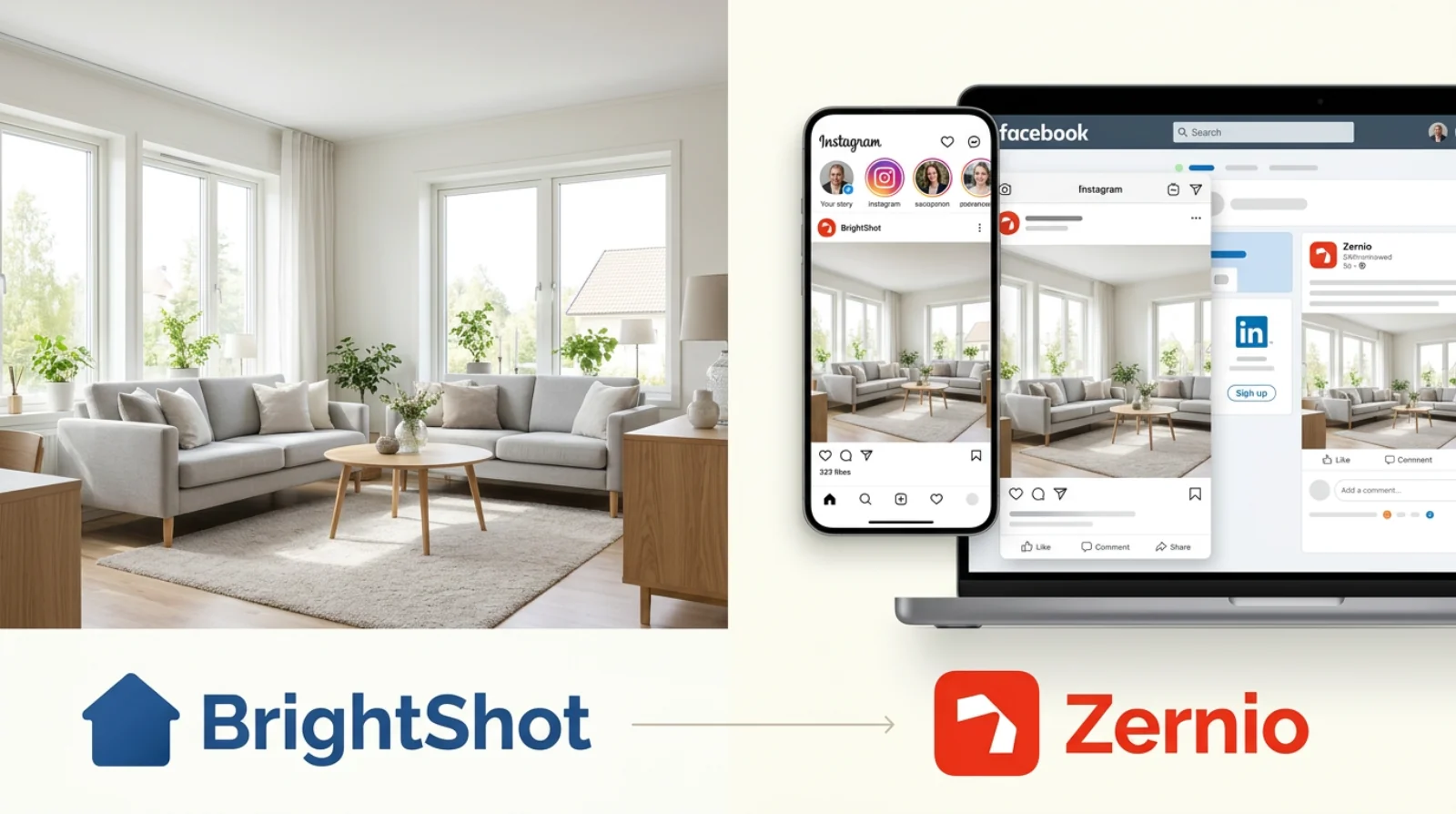
Let’s be honest, in real estate, presentation is nine-tenths of the law. This is where virtual staging companies come in. They’re the digital interior designers who help agents, photographers, and developers turn empty property photos into captivating, furnished spaces that grab a buyer’s attention online.
Why Virtual Staging Is No Longer Just a “Nice-to-Have”

Think about what it’s like for a buyer scrolling through listings. An empty room is just a blank box. It holds potential, sure, but most people aren’t designers. They can’t picture where the sofa goes or how a bedroom might feel cozy and inviting. They just see floors, walls, and a whole lot of question marks.
Virtual staging closes that “imagination gap.” By digitally adding stylish, appropriate furniture and decor into photos of an empty space, you’re not just showing a property; you’re telling its story. You’re showing them a home, not just a house.
The Jump from Manual Edits to AI-Powered Speed
Virtual staging itself isn’t brand new. For years, the only option was a traditional service where a designer would manually place furniture into photos using complex software. The results were good, but it was slow and expensive, often taking days to get images back. It just wasn’t practical for every single listing.
Today, the game has completely changed. Modern virtual staging companies lean on artificial intelligence to generate stunning, photorealistic results in seconds, not days. This leap in technology has made professional-grade staging:
- Incredibly Fast: Turnaround times have been slashed from days to literal moments.
- Budget-Friendly: Costs have fallen so dramatically that staging every room of every listing is now a no-brainer.
- Effortlessly Scalable: High-volume teams can now process hundreds of photos without breaking a sweat.
A Core Part of Modern Real Estate Marketing
This isn’t just a fleeting trend—it’s a foundational piece of any smart marketing strategy. The global virtual staging market is a testament to this, with expectations to hit $1.33 billion in 2026 and projected to rocket to as much as $10.8 billion by 2033. This isn’t just growth; it’s a fundamental shift in how properties are sold.
By transforming a property’s online presence, virtual staging gives every piece of marketing material more power. Your MLS listing pops, your social media posts get more engagement, and your entire campaign just performs better.
The visual punch of a well-staged photo can dramatically boost the effectiveness of real estate broker ads, stopping scrollers in their tracks and drawing them in. If you’re ready to put this tool to work, a great next step is to explore the different types of real estate virtual staging software out there. Understanding your options is the first step to competing—and winning—in today’s visually-driven market.
So, What Do Virtual Staging Companies Actually Do?
Let’s be honest, an empty room doesn’t sell itself. It’s a blank canvas that leaves far too much to a buyer’s imagination—and most people aren’t professional interior designers. This is where virtual staging companies come in. They are, in essence, digital storytellers for real estate, turning empty photos into spaces that feel like a potential home.
The concept sounds simple: add digital furniture to a picture. But what you get is much more than just a photoshopped-in couch. It’s a craft. A skilled artist or a sophisticated AI will look at the photo, analyze the lighting, take note of the architectural details, and then create a scene that’s not just believable, but aspirational.
The Core Services You Should Know
While adding furniture to an empty room is the bread and butter, today’s virtual staging companies offer a whole suite of services. These tools are designed to solve common real estate marketing headaches with just a few clicks.
Most companies build their offerings around these four key services:
-
Virtual Furnishing: This is the classic service we all think of. You provide a photo of an empty living room, bedroom, or patio, and they digitally furnish it with tasteful furniture, art, rugs, and décor. The real goal here is to show scale and help a buyer form an emotional connection.
-
Digital Decluttering & Item Removal: Got a great shot of a room, but the seller’s oversized recliner and personal clutter are ruining it? This service is a lifesaver. They can digitally remove existing items, giving you a clean slate that can be left empty or staged with a more modern look.
-
Virtual Renovations: This is an incredibly powerful tool for properties that need a little love. A good staging company can take a room with dated carpet and digitally swap it for sleek hardwood floors. They can repaint walls with a fresh, neutral color or even show what a kitchen would look like with new countertops and cabinets. It helps buyers see past the “now” and visualize the “wow.”
-
Day-to-Dusk Conversions: Ambiance is everything, especially online. This service transforms a standard daytime photo into a dramatic twilight shot. The final image shows a home with warm, glowing interior lights set against a stunning sunset sky. It’s the kind of high-end look that makes someone stop scrolling and pay attention.
What the Process Looks Like
Getting your photos staged is surprisingly painless. The entire workflow is built for busy agents who need quality results, fast. Whether you’re working with a human design team or a new AI platform, the steps are pretty much the same: you upload your high-resolution photos, give them some direction, and they handle the rest.
The real secret to getting a great result is providing a clear creative brief. Simply telling the designer you want a “Modern Farmhouse” or “Scandinavian” look and noting the room’s purpose (like “home office” vs. “nursery”) makes all the difference. This ensures the final image hits the mark for your target buyer.
This simple process means you can have marketing-ready images in your hands far quicker than you ever could with physical staging.
The Big Split: Human Designers vs. AI Platforms
The virtual staging world really has two different camps, and it’s important to know which one you’re working with. On one side, you have the traditional companies that employ teams of human graphic artists. These services deliver a highly customized, almost artisan-like result, but they typically take 24-48 hours and you pay for each photo individually.
On the other side are the newer AI-powered platforms. These modern virtual staging companies use advanced artificial intelligence to generate results in minutes or even seconds. For agents and teams with high-volume needs, this approach brings incredible speed, scalability, and usually a more budget-friendly price. If you’re curious about how AI is changing the game, our guide on virtual staging technology breaks it all down.
Ultimately, the choice between a human designer and an AI platform comes down to your project’s specific needs for speed, budget, and customization.
When you hear the term “virtual staging,” you might picture one specific process, but the industry isn’t a one-size-fits-all-shop. The truth is, virtual staging providers have split into three main camps, each with a totally different way of working, a different price tag, and a different kind of agent or team in mind.
Figuring out which one is right for you is the first, most important step. It’s a bit like deciding how to get a new suit. You could hire a world-class tailor for a fully custom-made piece, find a great shop that does expert alterations on an off-the-rack suit, or use a new app that shows you a perfect fit in seconds. Each path gets you a suit, but the experience, cost, and final result vary wildly.
A Comparison of Virtual Staging Service Models
To help you see the differences at a glance, this table breaks down the three main ways you can get your photos virtually staged.
| Feature | Full-Service Manual Staging | Hybrid Services | AI-Powered Platforms |
|---|---|---|---|
| Turnaround Time | 1-3 Business Days | 12-24 Hours | Seconds to Minutes |
| Cost Per Image | High ($25 - $75+) | Medium ($15 - $35) | Low ($1 - $15 or Subscription) |
| Scalability | Low | Medium | High |
| Style Variety | High (Custom) | Moderate to High | High (Large Libraries) |
| Revision Process | Slow (Email Chains) | Moderate | Instant and Unlimited |
As you can see, the trade-offs are pretty clear. You’re usually balancing speed and cost against the level of human touch involved in the final product. Let’s dig into what each of these models feels like to work with.
Model 1: The Full-Service Manual Artisans
On one end of the spectrum, you have the traditional, full-service boutique agencies. These are the master tailors of the virtual staging world. When you hire one of these companies, you’re commissioning a team of human 3D artists and professional interior designers to create your image from scratch.
This hands-on, “artisan” approach gives you an incredible amount of control. Designers can follow detailed creative briefs, match unique architectural styles, and produce images so realistic they’re often indistinguishable from a top-tier physical staging. This is the go-to choice for ultra-luxury properties or specific marketing campaigns where every single detail has to be perfect. Of course, that level of custom work costs more in both time and money.
- Turnaround Time: Expect 24-72 hours per image.
- Cost: Usually runs $25 to $75+ per photo.
- Best For: High-end luxury listings, unique architectural homes, and agents who need total creative direction.
Model 2: The Hybrid Services
In the middle, you’ll find the hybrid model. These providers have built a process that combines smart software with a human designer’s final touch. The software does the heavy lifting—placing furniture, setting up basic renders—and then a person steps in to review, refine, and add the final polish.
This approach offers a great middle ground. You get a faster turnaround and a lower price point than a fully manual service, but the final image still benefits from a professional designer’s eye. It’s a solid, popular choice for a wide range of real estate professionals who want quality without the artisan price tag.
Model 3: The AI-Powered Platforms
The newest and fastest-growing category is the fully automated, AI-powered platform. These modern virtual staging companies have blown the doors open on accessibility. Using sophisticated artificial intelligence, tools like Apply Design can analyze an empty room and generate multiple photorealistic design concepts in just seconds.
The biggest wins here are speed and scalability. An agent can now stage an entire home’s worth of photos in the time it takes to grab a coffee. For high-volume teams, property managers, and busy real estate photographers, this is an absolute game-changer. While you might not have the same pixel-level control as a manual service, the combination of speed, affordability, and constantly improving quality makes AI the most practical option for the vast majority of listings today.
The emergence of AI platforms marks a fundamental shift in how we market property. A task that once took days and a hefty budget can now be done instantly for a fraction of the cost, giving every agent the power to stage every single listing.
This flowchart can help you visualize which path makes the most sense for any given photo, whether it’s an empty room or one that needs a digital refresh.

Ultimately, picking the right type of virtual staging partner comes down to your specific business needs. If you’re marketing a record-setting penthouse, the investment in a manual artisan service might be completely justified. But for the fast-paced reality of everyday real estate, the efficiency and accessibility of AI-powered platforms offer a clear competitive edge.
Your Practical Checklist for Evaluating Providers
Picking a virtual staging company feels like a huge decision, and honestly, it is. This isn’t just another vendor; they’re your partner in presentation. The quality of their work has a direct line to how potential buyers feel about a property, so you need to look past the price tag and really dig into what they offer.
Think of it like hiring a professional photographer. You wouldn’t just ask, “How much?” You’d pour over their portfolio, get a feel for their style, and understand their process. You need to apply that same level of scrutiny here to make sure the final images align with your brand and actually help sell the home.
Judge the Photorealism and Image Quality
This is the make-or-break factor. If the staging looks fake, it’s worse than no staging at all. Buyers have a keen eye for bad CGI, and the moment they spot a floating sofa or an unnatural shadow, you’ve lost their trust.
When you’re looking through a company’s portfolio, be a critic. Ask yourself:
- Is the lighting believable? Does the light coming through the windows cast soft, accurate shadows on the furniture? Or do the shadows look like harsh, cut-and-paste shapes that don’t belong?
- Does everything fit? Is the scale right? Nothing screams “fake” faster than a comically oversized couch or a dining table that looks miniature. A true pro masters the room’s dimensions so every piece feels like it was meant to be there.
- How do the textures look? Zoom in on the details. Can you see the grain in the wood, the weave of the fabric on a chair, or the subtle sheen on a metal lamp? If it all looks flat and digital, it won’t convince anyone.
Pro Tip: Ask to see before-and-after shots of tricky rooms—ones with weird angles, multiple light sources, or deep shadows. That’s where you’ll separate the amateurs from the artists.
Evaluate the Style Library and Diversity
You wouldn’t use the same marketing for every single listing, so why settle for a one-size-fits-all staging library? The best providers have a deep and varied collection of furniture and decor, giving you the flexibility to match the aesthetic to the home and its most likely buyer.
A top-tier service should arm you with a wide range of popular styles, like:
- Modern and Contemporary
- Scandinavian and Minimalist
- Farmhouse and Rustic
- Traditional and Transitional
- Coastal and Bohemian
The ability to tailor the look is everything. You’re telling a story, and staging a sleek downtown loft requires a completely different vocabulary than a cozy suburban colonial. A robust style library is your toolbox for telling that story effectively.
Analyze Turnaround Speed and the Revision Process
In real estate, speed is everything. A listing can’t just sit on the back burner for a week while you wait for photos. You need to know exactly how long it takes to get your images back—are we talking minutes or days?
Just as important is what happens when you’re not happy with the first draft.
- AI platforms often let you make changes instantly. Don’t like that couch? Click a button and try a whole new style.
- Manual services typically mean sending an email with your feedback and waiting another 12-24 hours for the new version. Those delays can really add up.
Get clarity on their revision policy before you commit. Are changes unlimited? Do they cost extra? A fast, painless revision process is non-negotiable for keeping your workflow moving. Understanding their policy is also key to managing your budget, as different providers have different ways of billing for their services. We break down all the pricing models you’ll encounter in our complete guide.
Consider Workflow Integration and Customer Support
If you’re an individual agent, a simple, user-friendly website might be all you need. But if you’re running a high-volume team, a photography business, or a brokerage, you need tools that can keep up. Ask if they offer an API (Application Programming Interface), which is basically a way to plug their service directly into your system to automate bulk orders.
And don’t forget to kick the tires on customer support. When you’re staring down a deadline and something goes wrong, you need to know a real human is there to help. Do they offer live chat, email, or phone support? What are their hours? A responsive support team can be an absolute lifesaver.
Why API and Workflow Integration Separate Pros from Hobbyists
If your team handles more than occasional staging, image-by-image ordering becomes a bottleneck fast. Someone has to select photos, upload them manually, assign styles, manage revisions, rename files, and push the final assets back into the listing workflow. That’s manageable at low volume. It breaks once listing count rises.
The strongest virtual staging companies aren’t just image editors. They’re workflow vendors. According to AI Home Design’s staging statistics roundup, advanced platforms now use APIs for bulk photo processing — including decluttering, staging, and day-to-dusk conversion — and the top providers can deliver 4 to 8 hour turnarounds with 99% uptime, while manual edits often take days.
For a brokerage, that changes the economics of marketing operations. Faster delivery means fewer launch delays. API access means your media team isn’t spending its week moving files between folders and vendor portals.
Features that actually matter at scale
Not every advanced feature matters to every team. These do.
- Bulk processing and integrations: If you manage high listing volume, ask whether the vendor supports batch intake and whether their API or SDK can tie into your CRM, media pipeline, or internal listing system. That’s what turns staging into a repeatable process rather than a coordinator task.
- Multi-service editing in one pipeline: Decluttering, virtual staging, sky replacement, day-to-dusk, and perspective correction often happen on the same listing. Vendors that split those into separate queues create friction. Vendors that unify them reduce handoffs. BrightShot, for example, exposes virtual staging, decluttering, lighting correction, day-to-dusk conversion, 360° tour support, and API/SDK access as part of one workflow stack — built specifically for teams trying to standardize output across many properties rather than buying isolated edits.
- Video and tour outputs: Still images are still the core listing asset, but they aren’t the whole marketing package anymore. Some advanced virtual staging companies can turn still photos into branded video walkthroughs or support immersive tour assets. That’s useful for social promotion, paid campaigns, and agent branding consistency.
Operational rule of thumb: If your team is growing, buy for process fit first and image price second. The cheapest provider often becomes expensive when coordinators spend hours fixing filenames, requesting revisions, and chasing delivery.
A Practical Scorecard for Comparing Vendors
Most vendor comparisons fail because they focus on visible features and ignore invisible risk. A staging company can have stylish samples, fast quoted delivery, and attractive pricing while still creating buyer trust issues that hurt actual conversion.
The biggest hidden trade-off with virtual staging is buyer deception risk. If the photos promise one experience and the showing delivers another, the problem isn’t just disappointment — it’s erosion of trust. That’s why vendor evaluation needs to include disclosure practices, realism standards, and revision judgment, not just turnaround and cost.
Questions that expose weak vendors
Ask these before you sign anything:
- How do you handle disclosure guidance? Will the vendor help your team mark virtually staged images clearly for MLS and marketing use?
- What is your revision process? Is the first draft usually close, or does the vendor rely on multiple rounds to get basic realism right?
- How do you stage modest homes? Can they avoid over-designing entry-level or middle-market listings?
- What happens with difficult rooms? Odd angles, poor lighting, mixed color temperatures, and cluttered edges are where quality gaps show up.
- Can you support operational scale? If your team suddenly has multiple active listings, will quality and delivery remain consistent?
- Who reviews final output? Is there any human oversight, or is everything fully automated?
A simple scoring template
Below is the scorecard I’d use with any brokerage selecting among virtual staging companies. Score each vendor 1–5 across these criteria:
| Evaluation Criterion | What to look for |
|---|---|
| Photorealism quality | Shadows, scale, and textures believable at full size |
| Style-property fit | Match neighborhood and price point without over-staging |
| MLS readiness | Compliant outputs and clear edited-image handling |
| Turnaround reliability | Holds up when volume spikes or revisions are needed |
| Revision clarity | How many revisions are included, and what counts as a change |
| Workflow integration | Portal-only, or fits cleanly into your existing process |
| Multi-service capability | Can also declutter, enhance, or handle twilight edits |
| Support quality | Real person reachable when a listing is going live |
| Buyer trust risk | Samples feel aspirational but still honest |
| Overall operational fit | Listing team would enjoy working with them weekly |
A vendor should make your listings easier to launch and easier to defend in person. If they only improve thumbnails, they’re not solving the full problem.
Calculating the Real ROI of Virtual Staging

It’s easy to see why virtually staged photos look good, but the real question is: does the investment actually pay off? For any savvy agent or investor, business decisions come down to the numbers, not just aesthetics.
The great news is that the data is clear. We’re moving beyond gut feelings to look at how virtual staging directly impacts your bottom line. It’s not just a marketing expense; it’s a genuine investment strategy with measurable returns.
Reducing Time on Market
In real estate, time is one of the biggest hidden costs. Every day a property sits vacant, it’s racking up carrying costs and losing market momentum. This is where virtual staging delivers its first major win.
The numbers speak for themselves. One analysis found that virtually staged homes sell in just 24 days on average, a massive improvement over the 90 days unstaged properties can linger. That’s a 73% reduction in selling time, which means less money spent on holding costs and more capital freed up for your next project.
The logic is simple: virtually staged photos capture more attention online, leading to more clicks, more interest, and ultimately, more showings from serious buyers who have already formed an emotional connection with the space.
Increasing the Final Sale Price
It’s not just about selling faster; it’s also about selling for more. Virtual staging has a direct impact on a property’s perceived value, which often translates into higher offers from buyers.
Reports consistently show that staged properties can sell for 5% to 23% more than their unstaged competition. On a $500,000 property, even a modest 5% boost adds an extra $25,000 to the sale price. When you consider that virtually staging a few key photos can cost less than $100, the return on investment is undeniable.
The Financial Showdown: Virtual vs. Physical Staging
To really grasp the financial upside, it helps to put virtual staging head-to-head with its traditional counterpart: physical staging. The numbers reveal a stark contrast in cost, time, and overall return.
Here’s a direct comparison of the investment and potential returns.
Financial Breakdown of Physical vs Virtual Staging
| Metric | Physical Staging | Virtual Staging |
|---|---|---|
| Average Upfront Cost | $1,500 – $7,200+ | $20 – $150 (for key photos) |
| Turnaround Time | 7 – 14 Days | Seconds to 48 Hours |
| Average ROI | 102% – 909% | 500% – 3,650% |
| Scalability | Low (logistically complex) | High (digital and instant) |
This side-by-side look makes the financial advantage of virtual solutions crystal clear. You get a powerful marketing tool that influences buyer psychology for a tiny fraction of the cost and time.
The market has certainly taken notice. An incredible 70% of U.S. realtors now use virtual staging. It costs 95–99% less than physical staging, and with AI-powered services starting at just $1–$15 per photo, the financial barrier to entry has all but disappeared. With a potential ROI ranging from 500–3,650%, virtual staging dramatically outperforms traditional methods. You can learn more about these emerging AI trends and costs to see where the industry is heading.
Boosting Online Buyer Engagement
The journey to a sale always starts with a click. In a crowded online marketplace, your photos are your first and best shot at grabbing a buyer’s attention.
Virtual staging works like a magnet, and key engagement metrics prove its value:
- More Views: Listings with virtually staged photos get up to 40% more online views.
- Qualified Interest: Staged properties attract 74% more interest from serious buyers, helping to weed out the casual browsers.
- Increased Showings: Agents report that 41% of clients are more willing to book an in-person tour after seeing a home staged online first.
Each of these metrics is a critical step in the sales funnel. By perfecting that first impression, virtual staging sets off a chain reaction that results in more qualified leads, faster offers, and a higher sale price.
How to Weave Virtual Staging into Your Business
Knowing what virtual staging is and why it works is a great start. But the real magic happens when you build it directly into your workflow. Let’s move past the theory and look at how different pros can turn this service into a consistent part of their business model—one that actually makes them money.
For Real Estate Agents and Teams
For agents and teams, the name of the game is consistency. The most successful approach I’ve seen is making virtual staging a standard, non-negotiable part of your marketing package for every empty or awkwardly furnished home you list. Don’t treat it like an optional upgrade; make it a core part of what you bring to the table.
Your workflow can be surprisingly simple:
- Get Great Photos: Once the property is clean, make sure you get professional, high-resolution photos. This is the foundation for everything, so don’t cut corners.
- Pick the Hero Shots: You don’t need to stage every room. Focus on the ones that matter most: the living room, primary bedroom, and maybe a flex space that could be a home office or dining room.
- Find Your Signature Style: Choose a design aesthetic that clicks with your ideal buyers, like a clean Transitional or a cozy Modern Farmhouse look. Sticking to a consistent style helps build your brand recognition across all your listings.
- Launch Strong: Your listing should hit the market with the staged photos from day one. That first impression is everything.
Making this a standard operating procedure doesn’t just look good; it creates a better experience for your clients and builds a portfolio that stands out. For an even deeper dive, our complete virtual staging for realtors guide has more specific strategies to help you get the best results.
For Real Estate Photographers
As a photographer, you’re in the perfect spot to offer virtual staging. It’s a natural, high-margin upsell. You’re already at the property taking the photos, so adding a staged package is a simple way to seriously boost your revenue on every single job.
Think of it like this: you deliver a folder of crisp, empty room photos. Then, you offer the agent a “vision package.” With a little behind-the-scenes work, you can transform those empty spaces into fully furnished, aspirational images, solving a huge marketing problem for your client right on the spot.
If you’re working with bigger brokerages and managing a high volume of listings, you’ll want to find a system that can keep up. An AI platform with an API can be a game-changer here. It allows you to automate the process of sending and receiving hundreds of photos, creating a smooth and incredibly profitable service that runs almost on its own.
For Property Developers and Investors
For developers, virtual staging is your best friend for pre-construction sales. It lets you start marketing and even selling units long before the last nail is hammered in. This gets your sales cycle moving faster and helps secure capital much earlier in the project’s timeline.
Instead of handing potential buyers a set of blueprints and asking them to use their imagination, you can show them exactly what their future home will look like. These photorealistic renderings of a finished and furnished space help buyers form an emotional connection and feel confident enough to commit.
To really paint a full picture, you can pair your staged images with other tools like real estate video templates. Combining these gives you a powerful marketing arsenal that gets buyers excited, minimizes your risk, and drums up maximum interest from the very beginning.
Onboarding Your New Staging Partner Successfully
Picture a Monday morning. A listing is ready to go live. Photos came back Sunday night, the agent wants staged versions by noon, and nobody is sure which rooms should be edited, who approves revisions, or how edited images should be labeled for MLS compliance. That’s how a decent vendor relationship turns into rush fees, rework, and frustrated agents.
Onboarding decides whether your relationship with one of the virtual staging companies you picked becomes a repeatable production system or just another marketing option agents use only when they have extra time.
Build the process before the next listing goes live
Start with intake. Define which room types qualify for staging, what photo quality is acceptable, which angles should be avoided, and who has final approval before files go to the vendor. If that decision happens listing by listing, turnaround slows down and revision counts climb.
Put the style rules in writing. A downtown condo, suburban move-up home, luxury new build, and dated estate sale need different furniture choices, density, and color palettes. Good vendors can adapt, but they still need direction from the brokerage if you want consistent branding across agents and offices.
Assign one owner for the relationship. That person handles vendor communication, revision requests, file naming standards, disclosure language, and exceptions. Shared ownership sounds collaborative; in practice, it usually creates duplicate requests and missed deadlines.
If your brokerage runs enough volume, go one step further. Test whether the vendor can accept batch orders, structured room tags, or API-based intake from your listing system. Price matters, but the labor savings usually come from fewer handoffs, fewer email threads, and fewer file mistakes.
Train for consistency, not creativity
Agents don’t need design training — they need request discipline. Show them how to choose staging that supports the listing strategy. Minimal staging works for clean, higher-end properties where architecture should lead. Alternate room-use concepts can help with awkward dens, lofts, or bonus rooms, but only when the layout supports the idea. Some rooms should stay unstaged because any edit will create more confusion than value.
Bring the staged photos to showings when the home is vacant. It helps connect the online presentation to the in-person walkthrough and protects buyer trust.
Track whether the partnership is working
Don’t judge the vendor by whether the first few images look good on a screen. Judge the partnership by whether your listing team gets faster and your agents keep using it. Track outcomes such as:
- Listing launch speed — Is the time from photography to publish date getting shorter?
- Agent adoption — Are agents reordering the service after the first few listings?
- Revision rate — Are first drafts close enough to use, or is the coordinator stuck managing corrections?
- Showing feedback — Do buyers respond well, or do agents hear that the photos felt misleading?
- Compliance accuracy — Are edited images delivered with the disclosures and file handling your MLS requires?
- Cost control — Are you seeing predictable per-listing costs, even during busy months?
Review those metrics after the first 10 to 20 listings. That sample size usually shows whether the problem is onboarding, agent behavior, or the vendor itself. If adoption is low, the issue is often operational — slow approvals, unclear room selection, and inconsistent style requests can make a capable vendor look unreliable.
Common Questions About Virtual Staging Companies
If you’re thinking about using a virtual staging company for the first time, it’s natural to have a few questions. Let’s walk through the most common ones I hear from agents and get you the clear, straightforward answers you need.
Is Virtual Staging Deceptive?
This is the big one, but the answer is a firm no—as long as you’re transparent about it. Honesty is always the best policy here. The golden rule is to clearly disclose that the images are virtually staged.
Most MLS platforms have a dedicated field just for this purpose. Even better, add a simple watermark like “Virtually Staged” directly on the photo. Think of it less as a trick and more like an architect’s rendering for a new construction project; you’re not hiding the truth, you’re showcasing the property’s incredible potential. Many top agents even include both the empty and the staged photos in their listings to give buyers the complete picture.
Can I Stage a Room That Already Has Furniture?
Absolutely. This is a game-changer for listings that are currently occupied. The service is usually called virtual decluttering or item removal.
First, the virtual staging company digitally removes the existing, unwanted items from your photo. Once you have a blank canvas, they can then fill the empty space with a fresh, modern design that will appeal to a wider audience.
This two-step process is a powerful tool for occupied homes, especially those with dated or highly personal furniture. It lets you present a clean, aspirational look without ever asking the seller to lift a finger or move a single box.
How Much Does It Really Cost?
Pricing really depends on the type of service you choose. With traditional, designer-led virtual staging, you can expect to pay anywhere from $25 to $75+ per photo.
However, the new wave of AI-powered platforms has completely changed the cost equation. Many of these services have brought the price down to just $1 to $15 per photo. Some even offer unlimited use with a flat monthly subscription, which is a fantastic value for high-volume teams.
Ready to see how fast and affordable professional-grade visuals can be? With BrightShot, you can transform your property photos with stunning AI virtual staging, decluttering, and enhancements in just seconds. Start your free trial today and create listing images that sell.