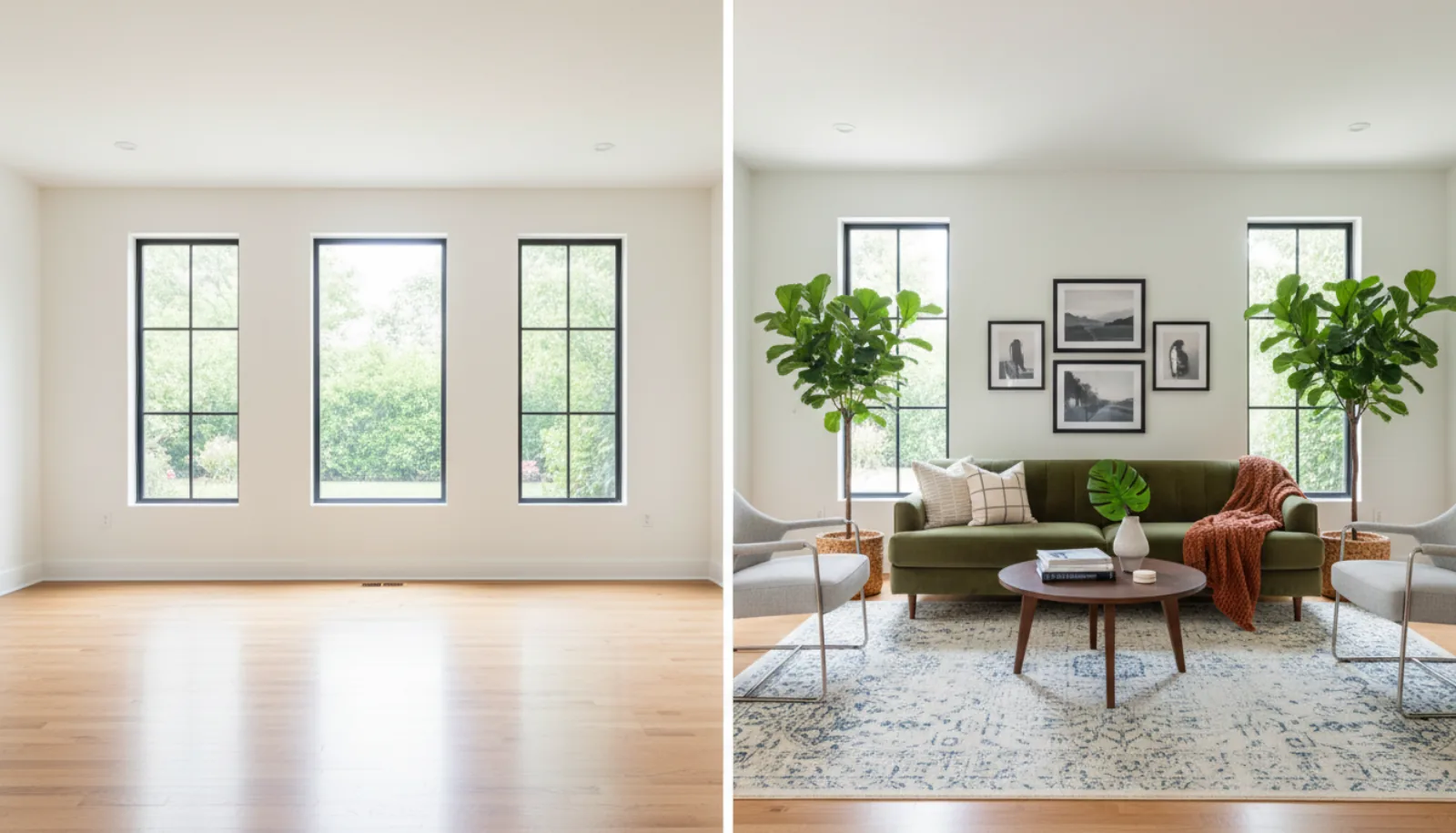
A beach house listing usually arrives with the same assumption: the view will do the heavy lifting. Sometimes it does. More often, it doesn’t. Buyers still judge the living room, the kitchen, the patio flow, the lighting, and whether the home feels like a polished escape or a project waiting to happen.
That matters even more in a market where modern beach houses are projected to grow from USD 15.59 billion in 2025 to USD 26.20 billion by 2032, with a projected 7.7% CAGR, driven in part by demand for contemporary layouts with open floor plans and indoor-outdoor connectivity, according to the modern beach houses market outlook. More buyers looking at coastal property means more listings competing for attention.
The best beach house ideas don’t just make a property prettier. They make it easier to market. They photograph better, stage faster, and help buyers understand why a home deserves a premium position. That’s where design and visual strategy need to work together.
I’ve seen beautiful beach properties underperform because the interiors looked busy, dim, or disconnected from the lifestyle buyers wanted. I’ve also seen ordinary rooms become compelling once the styling matched the architecture and the photos were edited with restraint. BrightShot fits squarely into that workflow. It helps agents, photographers, and property teams clean up, stage, relight, and reframe what’s already there so the listing tells a cleaner story.
Here are the beach house ideas that consistently create stronger visuals and more persuasive listings in 2026.
1. Coastal Minimalism with Natural Materials
Minimalism works especially well in beach properties because the ocean view should remain the star. If the room is packed with decor, buyers start looking at accessories instead of architecture.
Natural materials keep the space from feeling cold. Reclaimed wood, pale oak, limestone, jute, linen, and matte ceramics soften the clean lines and give the home some tactile warmth. That balance matters. Sparse can feel elegant. Empty can feel unfinished.

Why it sells well
Contemporary coastal buyers are actively looking for homes with clean aesthetics, extensive glazing, high ceilings, and indoor-outdoor flow, which is part of what’s behind projected growth in this segment, as outlined in this modern beach house design guide. Coastal minimalism supports all of that because it removes visual friction.
A Montauk-style living room with one strong sofa, two sculptural chairs, and a woven rug will usually outperform a room crowded with themed accessories, shell art, and accent furniture. The photos read faster. Buyers can imagine themselves there faster too.
There’s also a practical advantage for agents. Minimal rooms are easier to retouch cleanly and stage virtually without making the final result look artificial.
Practical rule: If an item doesn’t improve scale, texture, or function in the photo, remove it.
What works and what doesn’t
What works:
- Layered neutrals: Cream, sand, driftwood, and stone tones hold up across daytime and twilight photography.
- Texture over decoration: Jute rugs, linen slipcovers, and wood grain create depth without clutter.
- Targeted staging: BrightShot’s virtual staging and decluttering tools help test lighter furniture layouts before anyone rents or buys physical pieces.
What doesn’t:
- Overly stark rooms: A white box with no texture feels more like a short-term rental turnover than a luxury listing.
- Theme-heavy styling: Rope knots, fake coral, and signage make the home look less elegant.
- Mixed wood tones with no hierarchy: That usually creates noise in wide-angle shots.
If you want a useful companion for kitchens in this style, this roundup on coastal kitchen design shows where natural textures and cleaner lines work best.
2. Nautical-Inspired Color Schemes
Blue and white still works. The problem isn’t the palette. It’s how often people push it into cliché.
The best nautical-inspired beach house ideas borrow from maritime color language without turning the house into a themed set. Navy, crisp white, weathered oak, sandy beige, muted aqua, and brushed nickel still feel timeless. Red, novelty anchors, and too many stripes usually don’t.

Use the palette to create clarity
Cape Cod cottages and Maine coastal homes have used this formula for years because it communicates “waterfront” almost instantly. In listing photography, that immediate recognition is useful. A buyer scrolling quickly can register the mood before reading a single line of copy.
The stronger approach is to let one color lead. Navy cabinetry in a mudroom. Soft blue upholstery in a sitting area. White walls and pale flooring doing the rest of the work. If every room fights for attention with a different shade of blue, the home feels fragmented.
For staging experiments, BrightShot’s style tools are useful for previewing alternate blue-grey directions before committing to repainting or replacing decor. This guide to blue grey interior design is a good reference point if you’re trying to stay coastal without becoming predictable.
Keep the whites warm enough to feel livable. Cool whites can turn clinical fast in coastal light.
Smart marketing moves
A few tactical choices help this style perform better in photos:
- Deepen the blues selectively: Richer navy accents can anchor a room in photos, but they shouldn’t darken the entire frame.
- Protect the exterior backdrop: Blue sky and water matter more when the interior palette is restrained.
- Balance the shadows: White sofas, white millwork, and bright windows need careful correction or they blow out quickly.
Outer Banks and Florida Keys listings often benefit from this approach because the palette instantly supports the resort feeling buyers expect. It’s familiar, but if the styling is disciplined, it doesn’t feel tired.
3. Open Floor Plans with Integrated Indoor-Outdoor Living
This is the beach house move that buyers understand in one second. A wide living room, large sliders, continuous flooring, and a direct line to the terrace or deck almost always create the hero image of the listing.

Modern coastal buyers consistently favor reverse and open floor plans that maximize natural light and ocean views, a pattern highlighted in this guide to modern beach homes. That preference shows up directly in how listings perform visually. People want to see the relationship between the sofa, the dining area, the glass wall, and the water beyond it.
The visual payoff
Malibu and San Diego homes do this especially well. The living area doesn’t stop at the glass. It continues outward with matching tones, aligned furniture, and a deck that feels like another room.
That only works if the transition is clean. Mismatched pavers, cramped furniture near the sliders, or too many patio accessories break the illusion. In marketing terms, you lose the continuity that makes the property feel expansive.
A few fixes usually create a big difference:
- Clear the thresholds: Remove floor mats, plant stands, and anything blocking the doors.
- Match interior and exterior tone: Even if materials differ, they should feel related in color and finish.
- Stage for movement: Leave enough space that buyers can imagine a natural path from kitchen to dining to terrace.
BrightShot’s perspective tools and lighting correction are especially helpful here because beach listings often have one technical problem: dark interiors against very bright exteriors. You need both to read well in the same frame. If the room is properly balanced, buyers can understand the whole lifestyle shot at once.
A split-level layout can also add interest when handled correctly. This piece on step-down living rooms is useful if your beach house has level changes that need to feel intentional rather than dated.
Later in the marketing package, video helps sell the flow better than still photography alone.
4. Eco-Luxury and Energy Efficiency
A beach house can photograph as high-end and still feel expensive to own. Buyers notice that tension fast. The strongest listings resolve it by showing a home that looks refined, holds up in salt air, and runs efficiently without asking for constant maintenance.
That is the primary selling angle here. Eco-luxury in a coastal property is less about abstract sustainability language and more about visible decisions buyers can trust. Efficient glazing, exterior shading, reclaimed or responsibly sourced wood, low-VOC finishes, corrosion-resistant fixtures, durable roofing, and water-wise landscaping all support the price in a practical way.
Show proof in the visual package
General claims like “green features” rarely help a listing. Specific proof does.
Use one hero image to show the architecture and light control, then add two or three supporting shots that capture materials up close. Window lines with exterior overhangs. Hardware that reads as marine-grade rather than decorative. Cabinetry or wall paneling with texture buyers can almost feel on screen. Those details do real marketing work because they answer the buyer’s next question before it gets asked: will this home age well by the coast?
For higher-priced properties, that visual proof protects the asking price. It also gives agents better language for brochures, listing descriptions, and social posts. Instead of vague luxury copy, the marketing can point to finishes and systems that lower upkeep and improve comfort.
What to emphasize in staging and photography
Energy efficiency is hard to sell if the room feels cold or technical. Stage these homes for warmth and clarity.
Keep utility features in context. A battery wall, upgraded mechanicals, or solar setup should be photographed cleanly and only if the installation looks organized and premium. If it does not, mention it in the listing copy and keep the main photo set focused on the living experience. Buyers shop with emotion first, then justify with specs.
The same rule applies to broader lifestyle positioning. Interest in sustainable off-grid living can strengthen the story for the right buyer profile, especially in storm-prone or remote coastal markets. The presentation still needs discipline. Show the comfort, explain the resilience, and avoid overselling features the home does not fully deliver.
BrightShot is useful here because eco-forward homes often have a subtle visual advantage that standard editing misses. Balanced natural light, clean material tones, and accurate exterior color all help efficient design read as premium rather than plain. That shift matters in listing performance. Buyers do not reward good specifications they cannot see.
5. Luxury Spa and Wellness Features
Wellness spaces earn attention because they change how buyers imagine using the property. A soaking tub facing the water, an outdoor shower tucked behind textured stone, a sauna, or an ocean-facing plunge pool creates a resort layer that ordinary coastal listings don’t have.
The mistake is treating these areas like secondary amenities. They need their own visual campaign.

What buyers respond to
A good spa bath photograph does three things at once. It shows the finish quality, preserves a sense of privacy, and lets the buyer read the layout immediately.
That’s why wide-angle alone isn’t enough. Pair the room shot with one tight composition of hardware, stone texture, or the edge of a freestanding tub against the window line. Those details signal quality better than generic “luxury bathroom” copy ever will.
A spa feature only feels premium if the photo shows calm, not clutter.
Montecito-style homes and ultra-luxury Caribbean villas often get this right. They stage the setting around the experience. Rolled towels, minimal accessories, clean counters, and controlled lighting. No random toiletries. No half-filled shelves. No overstyled tray with ten props.
Presentation choices that help
For spa and wellness zones, a few techniques work consistently:
- Shoot day and twilight: Pools, hot tubs, and steam rooms often read differently depending on the light.
- Correct reflections carefully: Glass shower enclosures and polished stone can look harsh fast.
- Build a dedicated tour path: If the wellness area is a major selling point, give it room in the listing flow instead of burying it after bedrooms and utility spaces.
BrightShot’s day-to-dusk conversion and lighting correction can be especially useful here because water, glass, and stone need refinement without losing realism.
6. Statement Lighting and Architectural Drama
Some beach homes sell on softness. Others sell on structure. If the house has sculptural pendants, clerestory windows, exposed beams, double-height ceilings, or dramatic evening illumination, don’t bury that under safe, flat photography.
Lighting is one of the few design choices that shifts both atmosphere and perceived value at the same time.
Use light to define the architecture
A dramatic fixture over the dining table can establish scale in a way furniture never will. A run of recessed ceiling lighting can guide the eye toward the ocean. Wall sconces can make a hallway feel like a designed passage instead of dead space.
This is especially useful in contemporary builds where buyers are paying attention to ceiling height, glazing, and minimalist detailing. Fixtures should support the architecture, not compete with it.
The trade-off is obvious. Oversized statement lighting can look impressive in person and awkward in photos if it hangs too low or throws glare. That’s where image refinement matters. BrightShot’s lighting correction helps preserve fixture shape and ambience instead of letting bulbs blow out into white spots.
Don’t rely on daylight alone
Many agents photograph beach houses only in daytime because the view is strongest then. That leaves money on the table. Architectural lighting often shows best when the sky softens and the interior begins to glow.
Evening imagery is often where a modern beach house looks most expensive.
If the home has smart lighting scenes, use them. Show the dining zone warm and intimate. Show the exterior pathway lights pulling the buyer toward the terrace. Show the stair lighting that turns a simple circulation space into a feature.
This item is less about adding decor and more about revealing what the architect already built.
7. Curated Art and Gallery-Style Integration
Art can enhance a beach house fast. It can also narrow the buyer pool if it’s too personal, too aggressive, or too dominant in every frame.
The right approach is selective curation. One oversized abstract in the entry. A pair of textured works above a credenza. Sculptural ceramics in a recessed shelf. The house should feel collected, not crowded.
Use art to control tone
In higher-end listings, art helps position the home culturally as much as visually. A contemporary piece in a restrained room tells buyers this is a design-led property, not just a house near the water.
That said, personal collections can backfire. Strong portraiture, highly specific political work, provocative photography, or walls overloaded with small pieces tend to distract. When that happens, remove the art digitally and stage in more neutral work that fits the room scale.
BrightShot’s decluttering and virtual staging tools are particularly helpful here because they let you replace taste-specific pieces without physically rehanging an entire home.
Better than “blank walls,” but only if it’s disciplined
Gallery-style integration works best when:
- Scale matches the wall: Tiny art on a large wall reads as unfinished.
- The palette supports the room: Art should echo the home’s colors or materials, not fight them.
- Frames stay quiet: Thin black, oak, white, or frameless presentation usually wins in coastal settings.
Homes around Miami’s design-focused luxury market and Hamptons properties with contemporary interiors often use this strategy well. The art sharpens the identity of the home, but the architecture still leads.
8. Smart Home Technology and Automation Integration
Smart home features are easy to undersell because they’re often invisible in still photos. Buyers won’t automatically understand the value of automated shades, integrated lighting scenes, climate control, security, and whole-home audio unless you show the outcome.
The visual story should focus on what the system does for daily life.
Show the result, not the panel
A wall-mounted control pad isn’t the hero shot. A living room with the shades perfectly raised to frame the ocean view is. A dusk terrace with layered lighting and music-ready entertaining zones says more than a screenshot of an app ever could.
This category also benefits from stronger annotation in marketing assets. If the home uses a recognized platform such as Savant or another integrated control system, brief overlays in social media clips or listing presentation materials can help buyers connect the dots.
The trade-off is that too much visible tech can make a beach home feel cold. Concealed speakers, discreet controls, and clean millwork are usually more effective than showcasing hardware.
Where it helps most in coastal listings
Beach houses often sit in a hybrid use pattern. Full-time residence, second home, or seasonal rental. Smart systems become more persuasive when they support that reality:
- Remote security and monitoring
- Climate control before arrival
- Automated shades for heat and glare
- Lighting scenes for entertaining and lock-up routines
There’s also a practical content gap here. Design media covers beach aesthetics well, but there’s very little practical guidance on using visualization tools to compare design directions or test presentation options before spending on physical changes, which is noted in this beach house interior design content gap analysis. For agents and hosts, that makes AI-assisted previews more useful than most standard staging advice.
9. Infinity Pools and Water Feature Design
A buyer opens a coastal listing and decides in seconds whether to keep going. The pool shot often makes that decision. When the water edge lines up with the view and the terrace reads clean on camera, the home feels more expensive before anyone studies the square footage.
That result has less to do with pool size than with sightlines, finish choices, and how the feature is staged for photography. I’ve seen modest pools outperform larger installs because the edge detail was crisp, the deck was restrained, and the camera position made the ocean, architecture, and water work together.
Composition matters more than size
An infinity edge needs one strong hero angle first. Usually that shot is taken low enough to emphasize the vanishing edge, while still keeping enough of the home in frame to show how the outdoor area lives.
Secondary shots can then sell the supporting features. A spa, shallow sun shelf, spillway, fountain wall, or fire bowl deserves its own image if it adds value. Cramming everything into one wide frame usually weakens the listing and makes the space look busy.
Furniture styling matters just as much. A pair of loungers, neatly placed towels, and one shaded moment are often enough. Extra side tables, pool floats, storage bins, and bright accessories pull attention away from the view and make post-production harder.
For adjacent terrace planning, this gallery of backyard ideas with pool is a useful benchmark. The best lesson for beach listings is simple. Clear geometry and open sightlines photograph better than decorative clutter.
How to market the feature properly
In many beach listings, the pool is not an extra. It is part of the reason buyers book a showing, especially in second-home and luxury vacation markets where outdoor living carries as much weight as the interior.
Use BrightShot to test two versions of the same scene: golden hour for warmth and twilight for drama. Keep the horizon level. Clear out skimmers, hoses, maintenance poles, toys, and any furniture that blocks the edge line. If the weather was dull on shoot day, improve the sky carefully and keep reflections believable.
Water features also need context shots. Show the pool from inside the great room, from the primary suite, or from the dining terrace if those views exist. Those angles help buyers understand proximity, privacy, and how the property performs during real use, which is what turns an attractive amenity into a stronger sales story.
9-Point Beach House Design Comparison
| Design Approach | Implementation Complexity 🔄 | Resource Requirements ⚡ | Expected Outcomes 📊 | Ideal Use Cases 💡 | Key Advantages ⭐ |
|---|---|---|---|---|---|
| Coastal Minimalism with Natural Materials | 🔄 Low–Moderate: decluttering and cohesive sourcing | ⚡ Low–Moderate: reclaimed wood, textiles, maintenance | 📊 High visual clarity for photography; timeless market appeal | 💡 MLS listings, broad-market beach homes, photo-forward marketing | ⭐ Photographs exceptionally well; cost-effective staging |
| Nautical-Inspired Color Schemes | 🔄 Low: aesthetic styling and pattern placement | ⚡ Low: paint, textiles, decorative accents | 📊 Strong emotional resonance; boosts rental desirability | 💡 Vacation rentals, traditional coastal cottages, branding shoots | ⭐ Instantly recognizable beach lifestyle; easy to implement |
| Open Floor Plans with Seamless Indoor-Outdoor Living | 🔄 High: structural work, permits, specialized design | ⚡ High: large glass systems, durable flooring, HVAC upgrades | 📊 Very high perceived property value; excellent photography | 💡 Luxury coastal lots, entertainer homes, resort-style living | ⭐ Maximizes views and usable space; highly desirable feature |
| Eco-Luxury: Sustainable Design & Energy Efficiency | 🔄 High: integrated systems and certification processes | ⚡ High upfront: certified materials, solar, advanced HVAC | 📊 Premium pricing potential; long-term operating savings | 💡 Affluent eco-conscious buyers, certified green developments | ⭐ Compelling value story; certifications add credibility |
| Luxury Spa and Wellness Features | 🔄 High: specialized installations and plumbing/electrical | ⚡ Very high: pools, saunas, ongoing operations/maintenance | 📊 Significant value-add; strong rental & buyer appeal | 💡 Ultra-luxury estates, resort rentals, wellness-focused homes | ⭐ Creates experiential marketing and justifies premiums |
| Statement Lighting and Architectural Drama | 🔄 Moderate–High: design coordination and electrical work | ⚡ Moderate: custom fixtures, professional installation | 📊 Dramatic imagery suitable for magazines/listings | 💡 High-end renovations, architect-centric properties | ⭐ Differentiates listings; creates memorable visuals |
| Curated Art and Gallery-Style Integration | 🔄 Moderate: curation, museum lighting, placement | ⚡ High: artwork acquisition, insurance, display systems | 📊 Appeals to collectors; niche premium positioning | 💡 Homes marketed to collectors or cultural buyers | ⭐ Cultural cachet that can justify higher prices |
| Smart Home Technology and Automation Integration | 🔄 Moderate–High: system integration and programming | ⚡ High: control platforms, sensors, ongoing updates | 📊 Attractive to tech-savvy buyers; convenience-driven value | 💡 Second homes, lock-and-leave properties, luxury condos | ⭐ Enhances convenience/security; supports premium pricing |
| Infinity Pools and Water Feature Design | 🔄 Very High: engineering, landscaping, waterproofing | ⚡ Very high: construction, ongoing maintenance, chemicals | 📊 Iconic imagery; major perceived value uplift | 💡 Trophy properties, resort-style estates, viral marketing | ⭐ Highly photogenic; strong ROI in luxury listings |
Turn Ideas into Viewings Your Final Staging Checklist
Strong beach house ideas only matter when buyers can see them clearly. That sounds obvious, but a surprising number of coastal listings still rely on dim interiors, overstuffed rooms, inconsistent editing, and photos that never fully connect the house to the setting. The result is a property that feels more ordinary online than it does in person.
That’s expensive, especially in a segment where presentation has to support premium positioning. Beach house construction can range from relatively accessible coastal builds to luxury projects that climb much higher, and labor alone represents about 40% of total construction cost, according to HomeAdvisor’s breakdown of beach house building costs. When owners and developers have already put that kind of investment into a property, weak marketing visuals become the bottleneck.
The final review before listing should be blunt.
Are the rooms clean enough to read instantly?
Are there too many accessories competing with the view?
Does each key space have a reason to exist in the photo sequence?
Does the lighting feel intentional, or does it look like a quick phone shoot with nicer furniture?
Can a buyer tell, in a few seconds, whether this is a casual rental-style beach home or a polished modern coastal property?
The best-performing beach listings usually share the same discipline. They simplify. They highlight one design story per room. They use materials and layouts that support the architecture. Then they refine the visuals so the online experience matches the promise of the property.
That’s where AI tools have become useful rather than gimmicky. BrightShot helps bridge the exact gap many beach house owners, agents, and hosts run into. You may know the home needs to feel cleaner, brighter, more contemporary, or more aligned with a specific buyer profile, but you don’t want to spend heavily on trial-and-error staging or delay the listing while every edit gets handled manually. Virtual staging, intelligent decluttering, lighting correction, day-to-dusk conversion, and perspective swaps all help solve practical presentation problems fast.
For beach properties, that speed matters. Coastal light changes quickly. Outdoor areas need multiple versions. Interiors often need balancing against bright water views. And many sellers need to test different aesthetics, especially if the home sits between classic nautical styling and a more modern coastal look.
The final goal isn’t prettier content for its own sake. It’s action. Better listing photos create more curiosity. More curiosity creates more viewings. More viewings create a stronger negotiating position.
Before you publish the listing, make sure every image answers one question clearly: why would someone want to live here? If the visuals can answer that without friction, the design has done its job.
BrightShot helps real estate agents, photographers, property managers, and designers turn beach house ideas into listing-ready visuals fast. If you want cleaner interiors, stronger twilight shots, virtual staging that fits the home’s style, and polished MLS-compliant images without a long editing cycle, try BrightShot.