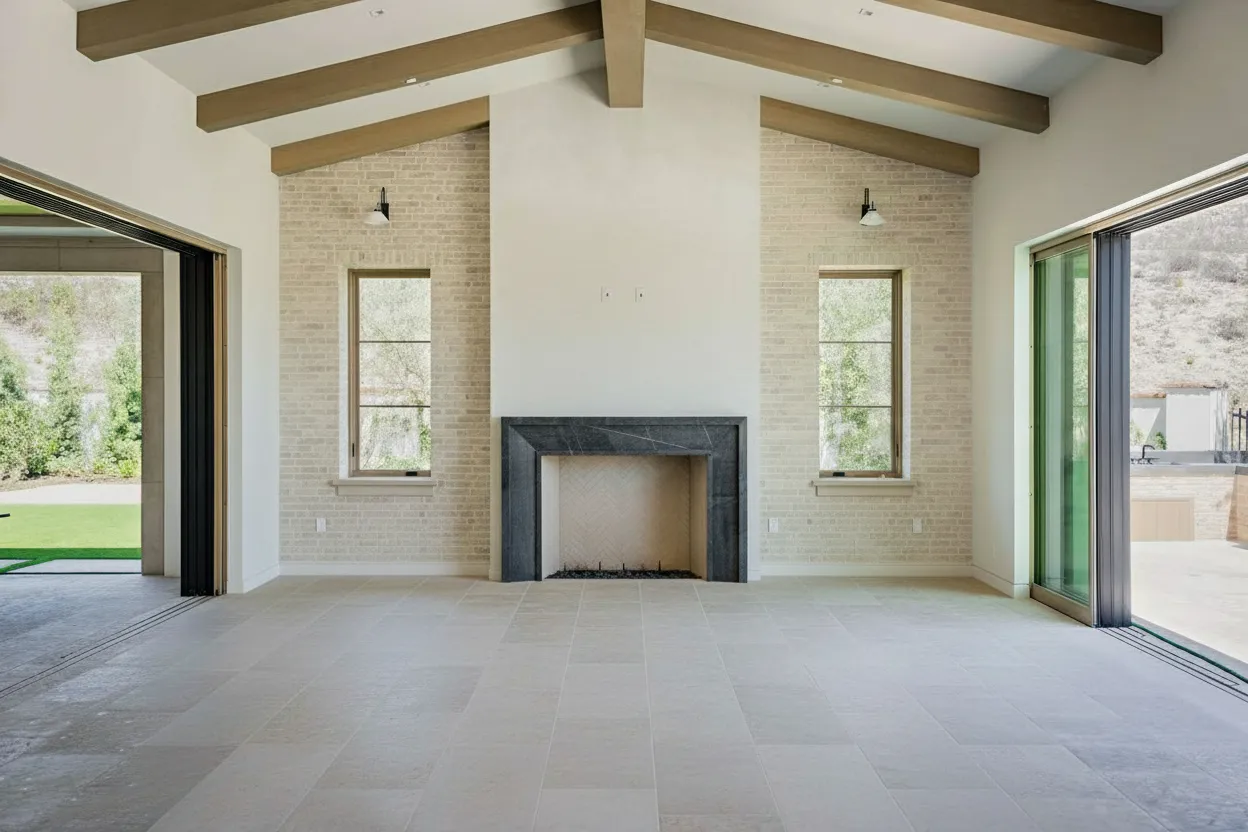
At its core, a house rendering is a detailed, photorealistic image created from a 3D model. Think of it as a professional photoshoot for a building that doesn’t exist yet, or a way to give an empty, uninspired house a stunning digital makeover before it ever hits the market.
What Is House Rendering and Why Does It Matter

Trying to sell a project from a flat, black-and-white blueprint is like trying to sell a story with a blank book cover. It’s nearly impossible. This is the exact problem you face when listing an unbuilt development or a vacant home—there’s nothing for buyers to connect with emotionally.
House renderings are the solution. They bridge this critical gap by turning abstract plans into a vibrant, compelling vision of a future home. Suddenly, clients aren’t just looking at lines on paper; they’re seeing the warm afternoon light streaming into the living room, the subtle texture of the granite countertops, and how the mature trees will frame the front entrance. It’s no longer just about showing a structure; it’s about selling a lifestyle.
From Blueprint to Believable Vision
A great rendering is a powerful form of architectural storytelling. It translates cold, technical data into a tangible experience that helps buyers see themselves living in the space. This becomes absolutely essential for:
- Off-Plan Properties: It makes an unbuilt project feel real and substantial, giving buyers the confidence to invest long before construction is finished.
- Major Renovations: It showcases the “after” picture with stunning clarity, helping homeowners and investors fully grasp the project’s potential and value.
- Vacant Homes: It fills empty rooms with stylish furniture, art, and decor, demonstrating a property’s true scale and possibilities.
The techniques behind this are quite sophisticated. If you’re curious about the different types of visualizations available, exploring what professional 3D architectural rendering services offer can give you a much clearer picture of the possibilities.
A rendering’s true power is in making the intangible tangible. It solves a core real estate challenge: helping buyers fall in love with a space that doesn’t physically exist in its final form.
Ultimately, house renderings close the “imagination gap” that so often causes buyers to hesitate. Instead of asking them to picture what could be, you’re simply showing them what will be. This replaces uncertainty with excitement and confidence—two crucial ingredients for achieving a faster sale at a higher price point.
The table below breaks down exactly how renderings provide direct, practical solutions to some of the most common challenges real estate professionals face every day.
How Rendering Solves Key Real Estate Challenges
| Real Estate Challenge | How Rendering Provides the Solution | Key Outcome |
|---|---|---|
| Selling unbuilt properties from blueprints. | Creates a photorealistic image of the finished home. | Buyers can visualize the final product, increasing presale commitments. |
| Marketing outdated or vacant homes. | Virtually stages rooms with modern furniture and decor. | Shows the property’s full potential, attracting more interest and higher offers. |
| Communicating complex renovation plans. | Generates “before and after” visuals to illustrate the transformation. | Secures client/investor buy-in and clarifies the project’s end goal. |
| Attracting online attention in a crowded market. | Provides stunning, high-quality images for listings and social media. | Listings stand out, capture more clicks, and generate more qualified leads. |
As you can see, this technology isn’t just about creating pretty pictures. It’s a strategic tool designed to overcome specific sales hurdles, build buyer confidence, and directly impact your bottom line.
Exploring the Main Types of House Renderings
When you’re marketing a property, especially one that isn’t built yet, you need the right tools to tell its story. Not all rendering of houses is the same, and picking the right one can make all the difference. It’s a bit like photography—you wouldn’t use a portrait lens for a wide landscape shot. Each type of rendering has a specific job to do.

Generally, renderings fall into three main camps: exterior, interior, and aerial. Getting to know what each one does best allows you to move beyond just showing a property and start crafting a compelling argument for why a buyer should want it.
Exterior Renderings: Crafting Curb Appeal
First impressions count. An exterior rendering is your property’s digital handshake—it’s that “hero shot” that defines the entire listing. These images focus on the building’s architecture, materials, and landscaping to create immediate curb appeal. They’re absolutely essential for pre-construction projects where you’re selling a vision.
For instance, an exterior render can transform a blueprint into a tangible image, showing how a modern farmhouse will look nestled in its lot at golden hour, complete with glowing windows and a manicured garden. This helps a buyer see a home, not just a floor plan. You can see how powerful this is in projects like the Arrol House Renders, which beautifully translate concepts into photorealistic visuals.
Interior Renderings: Selling a Lifestyle
If the exterior gets buyers to the door, the interior renderings convince them to walk through it. These visuals bring the inside of the home to life, highlighting the flow, finishes, and, most importantly, the lifestyle it offers. This is where virtual staging really shines.
An empty room on a floor plan feels abstract and cold. An interior render, however, can fill that space with tasteful furniture, art, and decor. Suddenly, that empty box isn’t just a room; it’s a cozy living area perfect for family movie nights. We dive deeper into this technique in our guide to rendered floor plans.
An interior render doesn’t just show a room; it showcases a feeling. It helps a buyer imagine hosting dinner parties in the dining area or enjoying a quiet morning in a sun-drenched breakfast nook.
Aerial Renderings: Providing Context
Finally, you have aerial renderings, which pull back to give the big-picture view. These bird’s-eye visuals place the property within its environment, showcasing its location relative to parks, schools, waterfronts, or city centers.
It’s one thing to say a home is “close to the beach,” but it’s another thing entirely to show it. An aerial rendering can visually link the house to the shoreline in a single, powerful image, instantly conveying a value proposition that words alone just can’t match. It’s all about context, and in real estate, context is king.
The House Rendering Process: From Blueprint to Pixel
Ever wondered how a technical blueprint—a bunch of lines and numbers on a page—becomes a gorgeous image of a home you can almost walk into? It’s not magic, but a detailed process that blends architectural precision with digital artistry.
For a long time, the only way to get this done was the old-fashioned way: a slow, meticulous, and expensive journey handled by specialists.
The Traditional Workflow
It all starts with 3D modeling. Think of it as a digital construction project. An artist takes the architect’s plans and builds the entire home, piece by piece, inside a computer. Every wall, window, door, and roofline is created from scratch, forming a digital skeleton of the property.
But a skeleton isn’t a home. Next comes texturing and materials. This is where the artist plays interior designer, applying digital surfaces to everything. They add the specific grain to the hardwood floors, the subtle veining in a marble countertop, and the rough feel of exterior brick. Getting these details right is what separates a cartoonish drawing from a truly lifelike image.
With the model built and textured, it’s time to set the mood with lighting. The artist places and adjusts digital light sources to mimic the real world. They might simulate the bright, crisp light of a sunny morning or the warm, inviting glow of a home at dusk. Every shadow and reflection is carefully crafted.
Finally, we have the rendering itself. This is the purely computational step where the computer processes all that information—the model, the textures, the lighting—and generates the final 2D image. Depending on the scene’s complexity and the desired quality, this step alone could tie up a powerful computer for hours, sometimes even days.
This painstaking process is exactly why professional renderings were once a luxury reserved for large-scale developers with deep pockets. The cost, time, and specialized skills involved were simply out of reach for most agents and smaller firms.
A New, Faster Approach to Rendering
Fortunately, that’s all changing. The industry is in the middle of a huge shift, thanks to new cloud-based platforms and AI-powered tools that are making high-quality renderings faster and more affordable for everyone.
This isn’t just a small trend; it’s a massive market expansion. The global cloud rendering software market jumped from $2.95 billion in 2025 to $3.42 billion in 2026. You can read more about these global market report findings to see just how quickly this technology is being adopted.
What once took an artist a week can now be done in minutes. These modern tools allow agents to sidestep the slow, manual process entirely. You can upload a basic 3D model or even just a photo of an empty room, and let an AI engine do the heavy lifting of texturing, lighting, and creating the final, polished image.
If you have a simple 3D model and want to see this in action, you can learn how to transform a 3D render into a realistic photo using these new platforms. This new accessibility is turning a once-exclusive service into a go-to marketing tool for any real estate pro looking for an edge.
Choosing Between Rendering and AI Photo Enhancement
As a real estate professional, one of the most critical decisions you’ll make for any listing is how to present it visually. Do you commission a full rendering of a house from scratch, or do you enhance existing photos with AI? This isn’t just a matter of looks—it’s a strategic choice that directly impacts your budget, timeline, and marketing muscle.
Here’s a simple way to think about it: a full 3D rendering is like commissioning an artist to paint a masterpiece from a blank canvas. AI photo enhancement, on the other hand, is like hiring a world-class photo editor to perfect an existing photograph. Both create stunning visuals, but they start from completely different places and solve very different problems.
The flowchart below shows how this decision plays out in practice, comparing the traditional, manual 3D modeling workflow with the newer, faster path that AI opens up.

As you can see, AI has carved out a more direct route to top-tier visuals, especially when you already have a photo or a basic 3D model to work with.
Full Rendering vs AI Photo Enhancement A Quick Comparison
Deciding which path to take can be tricky, so here’s a quick breakdown to help you choose the right tool for the job.
| Factor | Full 3D Rendering | AI Photo Enhancement (e.g., BrightShot) |
|---|---|---|
| Best For | Properties that don’t exist yet (pre-construction). | Improving photos of existing properties. |
| Starting Point | Blueprints, architectural plans, or detailed sketches. | Existing photos (even low-quality ones). |
| Typical Use Cases | New developments, major gut renovations, off-plan sales. | Virtual staging, decluttering, day-to-dusk, item removal. |
| Cost | $500 - $15,000+ per image. | $15 - $50 per image. |
| Turnaround Time | 1-4 weeks. | Minutes to hours. |
| Output | A photorealistic image created entirely from data. | An edited, optimized version of the original photo. |
| Key Advantage | Unmatched accuracy for visualizing unbuilt projects. | Speed, affordability, and solving common photo problems. |
Ultimately, your choice depends entirely on your starting point. If you have nothing to photograph, you need a rendering. If you have a photo that needs help, AI is your answer.
When to Commission a Full Rendering
A full 3D rendering is your only real option when the property—or a key part of it—simply does not exist yet. It’s the tool you use to turn architectural plans into a compelling, photorealistic vision.
You’ll want to invest in a full rendering in a few key situations:
- Pre-Construction Sales: This is the most common and essential use. For new builds or entire developments, renderings are your primary sales tool for securing off-plan buyers. They show people exactly what they’re investing in, long before a shovel ever hits the ground.
- Major Structural Renovations: If you’re adding a second story, building a huge extension, or completely re-imagining a home’s facade, a rendering is crucial. It gives buyers, lenders, and permit offices a crystal-clear “after” shot.
- High-Stakes Marketing Campaigns: For luxury homes or significant commercial projects, a bespoke rendering ensures every single detail—from the exact marble veining to the custom landscape design—aligns with a high-end brand vision.
In short, a full rendering is about creating certainty. It’s an investment in a definitive, pixel-perfect vision when you can’t just go out and take a picture.
When to Use AI Photo Enhancement
On the flip side, AI photo enhancement is the perfect solution when you have an existing property but your photos aren’t doing it justice. This approach is much faster, significantly more affordable, and incredibly effective at fixing the most common problems that hold listings back.
Opt for AI enhancement when you’re dealing with:
- Vacant Homes: Instead of shelling out thousands for physical staging, AI-powered virtual staging can fill an empty room with beautiful, modern furniture in minutes. It helps buyers immediately connect with the space and see its potential.
- Cluttered or Dated Spaces: Is the seller’s decor a deal-breaker? AI tools can digitally declutter a room or swap out dated furniture for something fresh and appealing, presenting the home in its best possible light.
- Poor Quality Photos: If your images are dark, the sky is gloomy, or the lawn looks dead, AI is your best friend. It can handle complex tasks like day-to-dusk conversions, sky replacement, and lawn greening to make your photos pop online.
This method gives you remarkable flexibility. Even if you’re starting with a simple 3D model and just want to add that final touch of realism, AI can help. Our guide on how to transform a 3D render into a realistic image shows you exactly how to do it. By understanding the strengths of both paths, you can make the smartest financial and strategic decision for every single listing you manage.
The Business Impact of Professional House Renderings
Let’s be clear: a professional rendering of houses isn’t just about making a property look nice. It’s a powerful sales tool that directly impacts your bottom line. These visuals tap into buyer psychology, speed up their decision-making, and can genuinely boost a property’s perceived value. You’re no longer just selling a space; you’re selling a vision.
In a market this competitive, that vision is everything. When new construction is tight, agents and developers need an edge. Renderings provide it, allowing you to effectively market a repurposed building or showcase the high-end finishes of a “flight to quality” property. It’s all about creating desire and proving a property’s worth before anyone even walks through the door.
Unlocking Potential and Maximizing ROI
The true financial magic of a rendering is its ability to reveal what’s possible. An empty lot is just dirt and potential expenses, but a rendering transforms it into someone’s future home. A dated, cluttered apartment is a tough sell, but an AI-enhanced photo showing a clean, modern layout instantly highlights its true appeal.
This is where AI-powered tools are becoming a game-changer for savvy professionals. With features like intelligent decluttering or swapping out perspectives, you’re not just getting an edited photo—you’re getting a compelling asset designed to maximize your return on investment. You can see exactly how this technology works in our guide to AI in real estate photo editing.
A rendering’s job isn’t to be pretty; its job is to make a financial case. It bridges the gap between a property’s current state and its peak market value, often generating offers that reflect that future potential, not its present flaws.
Aligning With Market Investment Trends
This visual-first approach fits perfectly with where the market is headed. As investment capital flows back into real estate, compelling visuals are crucial for getting noticed. In fact, U.S. commercial real estate investment is projected to climb 16% to $562 billion by 2026, with investors chasing income-focused returns.
These investors are specifically targeting assets like multifamily and industrial spaces where new construction has slowed—multi-housing development in the U.S. is currently more than 75% below recent peaks. High-quality renderings are essential for capturing this capital by making these opportunities look tangible and lucrative.
To see where the money is flowing, you can dig deeper into the U.S. real estate market outlook. By using stellar visuals, you position your properties to meet this demand head-on, helping you secure faster sales at better prices.
How Renderings Tap Into 2026 Luxury Real Estate Trends

In luxury real estate, understanding your buyer’s mindset is everything. Today’s affluent clients, especially Gen X and millennials, aren’t just buying a house. They’re looking for a lifestyle investment centered on privacy, generous space, and a style that feels uniquely their own.
This is where a smart rendering of houses gives you a serious competitive edge. As the market shifts, so must our marketing. Renderings allow you to visually prove a property has exactly what these buyers crave—long before a single wall is built or a renovation is complete.
Giving Buyers Exactly What They Want to See
Looking at the trends shaping the high-end market, a few key demands stand out. Buyers are increasingly searching for properties that offer seclusion, more square footage, and flexible floor plans that can accommodate multigenerational living.
A well-executed rendering lets you put these features front and center. You can create powerful visuals that specifically highlight:
- Privacy and Seclusion: Use an aerial or exterior rendering to show off a home’s expansive lot, mature tree lines, or a stately gated entrance.
- Detached and Spacious Homes: Showcase the true scale of a property. Illustrate how a separate guest house, a dedicated home office, or a sprawling backyard really feels.
- Multigenerational Layouts: Create interior scenes that help buyers envision how a floor plan can comfortably host extended family, with distinct living suites or shared common spaces.
By using renderings to spotlight these in-demand features, you’re doing more than just showing a building. You’re speaking directly to the core desires of today’s luxury buyer and forging an instant, powerful connection.
This isn’t just a feeling; the numbers back it up. Between 2024 and 2025, interest in detached homes and villas jumped 15%, now making up 66.2% of all luxury inquiries as buyers double down on privacy. As one major trend report notes, integrating technology into how we market the built environment is no longer optional. You can learn more about how these 2026 trends are shaping real estate.
This is a perfect fit for modern AI-powered rendering tools. With access to huge style libraries, an agent can instantly reimagine a single property in multiple aesthetics—from sleek minimalist to cozy coastal modern—making it appeal to a much broader pool of qualified buyers.
Your House Rendering Questions, Answered
Alright, let’s get down to brass tacks. You’ve seen what house renderings can do, but you probably have some practical questions floating around. We’ll tackle the most common ones we hear from real estate professionals every day.
How Much Does Professional House Rendering Typically Cost?
The cost for a professional house rendering can be all over the map, with a single image running anywhere from a few hundred to several thousand dollars. The final price tag really depends on the project’s complexity, the level of detail you need, and whether you’re working with a traditional 3D artist or a newer AI-powered service.
While a custom, high-end architectural visualization is still a serious investment, the great news is that AI has made professional-grade visuals much more accessible. Services like virtual staging or photo enhancement now cost a tiny fraction of the traditional price, making it affordable to use them on every single listing, not just the luxury ones.
Are AI-Generated Renderings and Virtual Staging MLS-Compliant?
This is a big one, and the short answer is yes, as long as you’re doing it right. Any reputable AI enhancement service is built from the ground up to create MLS-compliant images. The goal is always to make realistic improvements—like adding furniture or updating decor—without misrepresenting the home’s permanent structure or features.
The golden rule is to enhance, not deceive. Swapping out a brown lawn for a green one is fine. Adding a swimming pool that doesn’t exist is a major problem. Always stick with a professional service that understands and follows MLS guidelines to keep your listings both ethical and effective.
How Long Does It Take to Get a House Rendering?
The time it takes to get a rendering back is probably the biggest night-and-day difference between the old-school approach and modern AI tools. A traditional 3D rendering project, from the initial consultation to the final image, can easily stretch over several days or even weeks.
In sharp contrast, AI tools work incredibly fast. Platforms designed specifically for real estate can deliver stunning results—like virtual staging, item removal, or a day-to-dusk conversion—in just a few minutes. That kind of turnaround means you can get your listings on the market faster than ever.
Can I Use Renderings for an Existing Furnished Property?
Absolutely. While renderings are a lifesaver for unbuilt homes, they are just as powerful for properties that are already furnished. Think about that listing with cluttered rooms, dated furniture, or a decor style that just doesn’t connect with today’s buyers.
AI tools let you digitally declutter the space, remove unwanted items, and stage it with entirely new, attractive interior designs. It’s the perfect way to show buyers a property’s true potential without any expensive physical staging or awkward conversations with the sellers.
Ready to transform your property photos in seconds? With BrightShot, you can get listing-ready visuals, from virtual staging to day-to-dusk conversions, with a single click. Try it free.