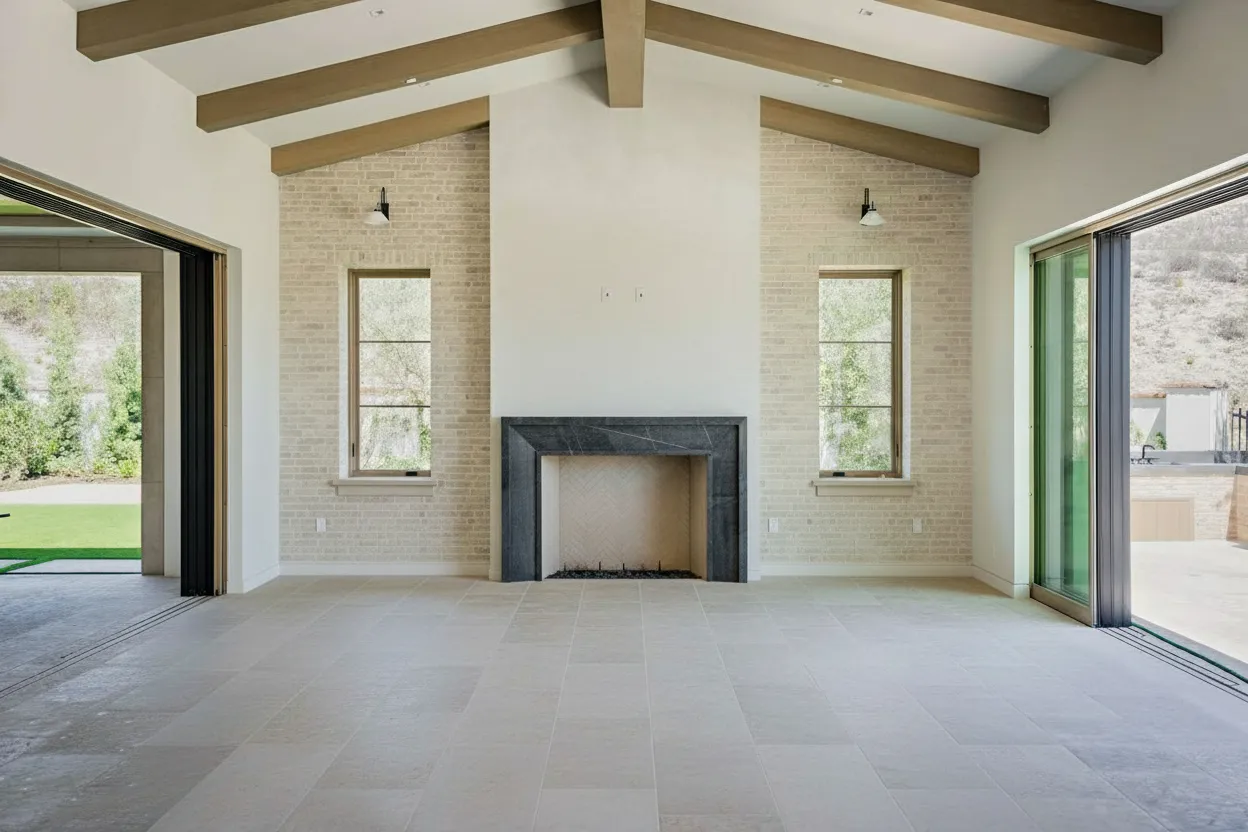
When you’re starting out, the best camera for real estate photography is going to be a mirrorless or DSLR model. The key is finding one with a large sensor that lets you swap out lenses, especially for the wide-angle shots you’ll need. These days, a lot of pros lean towards modern mirrorless cameras like the Sony A7 series for their high-tech features and lighter build, but a solid DSLR can still be a fantastic, budget-friendly workhorse.
Choosing the Right Camera System

Picking the right camera is the cornerstone of your real estate photography setup. It’s not about grabbing the most expensive thing on the shelf; it’s about finding a reliable system that helps you produce consistently professional photos and keeps your workflow smooth. Think of it as the engine of your business—it needs to be powerful, efficient, and dependable.
The big debate usually boils down to two main players: Mirrorless and DSLR. For a long time, DSLRs were the undisputed kings of professional photography. They’re built like tanks, have a massive ecosystem of lenses, and their batteries seem to last forever. They work by using a mirror to bounce the image up into an optical viewfinder, so you see a true, unfiltered view through the lens.
But in recent years, mirrorless cameras have really taken over the scene. By ditching the bulky mirror mechanism, they’re much more compact and lightweight—a huge plus when you’re hauling gear from property to property all day. They also pack some serious tech advantages, like an electronic viewfinder that gives you a live preview of your exposure. What you see is exactly what you get, which saves a ton of guesswork.
To help you weigh the options, here’s a quick breakdown of how these two camera types stack up for property shoots.
Comparing Camera Types for Property Photography
| Feature | Mirrorless Camera | DSLR Camera |
|---|---|---|
| Size & Weight | Lighter and more compact. Easier to carry all day. | Heavier and bulkier, but often with a more rugged feel. |
| Viewfinder | Electronic (EVF). Shows a real-time preview of the final image. | Optical (OVF). Provides a clear, direct view through the lens. |
| Autofocus | Advanced on-sensor autofocus, often with better video focus. | Reliable and fast, especially with older, established lens systems. |
| Battery Life | Generally shorter due to the power-hungry EVF and screen. | Excellent battery life, often lasting an entire day of shooting. |
| Lens Selection | Growing rapidly with top-tier modern lenses available. | Huge selection of both new and affordable used lenses. |
Ultimately, both systems can deliver stunning results for real estate. The choice often comes down to personal preference—do you value the modern tech and portability of mirrorless, or the classic feel and battery life of a DSLR?
Full-Frame vs. Crop Sensor
Okay, beyond the Mirrorless vs. DSLR debate, the sensor size is probably the single most important decision you’ll make. The sensor is the heart of the camera; it’s the digital chip that captures light and turns it into a photo. You’ll mainly run into two sizes: Full-Frame and APS-C (also known as a Crop Sensor).
Think of a full-frame sensor as a big, expansive picture window. It lets in a ton of light and gives you a wide, sweeping view. A crop sensor is more like a smaller porthole—it captures less light and gives you a tighter, more “zoomed-in” perspective with the exact same lens.
This one difference has a huge ripple effect on your real estate photos in three important ways:
- Field of View: A full-frame camera uses the entire field of view of a wide-angle lens. This is absolutely critical for making interiors feel bright, open, and spacious instead of cramped.
- Low-Light Performance: Because a full-frame sensor has a larger surface area, it can gather more light. This translates to cleaner, sharper images with way less grainy digital noise when you’re shooting in dimly lit rooms.
- Dynamic Range: Full-frame sensors typically have a better dynamic range. This means they’re better at capturing detail in both the super-bright areas (like a sunlit window) and the deep, dark shadows of a corner in the same shot.
While crop sensor cameras are definitely more affordable and can still get the job done, a full-frame camera is widely seen as the professional standard for real estate work. It gives you the image quality and flexibility you need to walk into any property, under any lighting condition, and know you can walk out with killer photos.
Understanding Key Camera Features for Property Photos
Diving into camera specs can feel like trying to read a foreign language. You see terms like megapixels, sensor size, and dynamic range everywhere, but what do they actually mean when you’re standing in a poorly lit living room trying to get the perfect shot? Getting a handle on these core features is what separates guessing from making a smart, informed decision about the gear you invest in.
Think of it this way: these specs aren’t just technical jargon; they’re the ingredients in your recipe for a stunning photo. Each one has a job to do, and getting the mix right is what makes a property truly shine.
Sensor Size: The Foundation of Image Quality
If there’s one feature to obsess over, it’s the camera’s sensor size. A full-frame sensor is like having a huge picture window—it lets in a ton of light and gives you a much wider view of the scene. This is a game-changer in real estate, where you’re constantly battling dim interiors and trying to make rooms feel open and spacious.
On the flip side, an APS-C sensor, often called a crop sensor, is more like a smaller window. These cameras are usually more budget-friendly, but they capture less light and have a “crop factor” that essentially zooms in your lens. That 16mm wide-angle lens you bought? On an APS-C camera, it might act more like a 24mm lens, making it a real struggle to fit the whole room in the frame without getting that weird, distorted look in the corners.
- Better Low-Light Performance: Bigger sensors mean cleaner, crisper images with way less of that grainy texture (digital noise) you see in photos of dark rooms.
- Wider Field of View: They let your wide-angle lenses do what they were made to do—capture the broadest possible perspective, which is a must for interiors.
- Superior Image Detail: When the sensor gathers more light, you get richer colors and finer details in everything from the wood grain on the floors to the fabric on the sofa.
Megapixels: Do You Really Need More?
Camera brands love to shout about megapixels from the rooftops, but honestly, more isn’t always better. A megapixel is just a million tiny dots (pixels) that make up your image. Sure, a higher number means more detail, but it also creates massive file sizes that can bring your computer to a grinding halt during editing.
For pretty much all real estate needs—from online MLS listings to standard print flyers—a camera in the 24 to 30 megapixel range is the sweet spot. You get all the resolution you need for sharp, beautiful images without creating a workflow nightmare for yourself.
Key Takeaway: Prioritize sensor size over megapixels, every time. A 24-megapixel full-frame camera will almost always give you better results for real estate than a 50-megapixel crop-sensor camera, especially when the lighting isn’t perfect.
Dynamic Range: Your Secret Weapon for Tricky Lighting
Dynamic range might be the most underrated and crucial spec for real estate photography. It’s all about the camera’s ability to see and capture details in both the brightest parts of a photo (like a sunny window) and the darkest parts (like the corner of a room) at the same time.
Picture this: you’re shooting a living room with a gorgeous view. A camera with poor dynamic range forces you into a tough choice. You can either expose for the room, which will turn the window into a big, blown-out white blob, or expose for the view outside, which will plunge the room into a dark, shadowy mess. A camera with high dynamic range, however, can see it all. It captures the beautiful landscape outside and the subtle details of the furniture inside, all in one perfectly balanced shot. This isn’t a “nice-to-have”; it’s a necessity for professional results. If you want to dig deeper, check out our guide on how to improve the lighting of any room.
The Lens Mount: An Investment in Your Future
Finally, don’t overlook the lens mount. This is the physical ring where the lens connects to the camera. Every brand—Sony, Canon, Nikon—has its own system, so a Canon lens won’t just pop onto a Sony camera without an adapter (which can sometimes be clunky).
When you buy a camera, you’re not just buying a single piece of equipment; you’re buying into an entire ecosystem of lenses. Before you commit, do a little research on the wide-angle lenses available for that specific mount. Are there good, affordable options? Your lenses are a long-term investment that will likely outlive several camera bodies, so choosing a system with a healthy and growing selection of glass gives you the freedom to grow your business for years to come.
Essential Lenses and Gear Beyond the Camera Body

Picking the right camera body is a fantastic first step, but it’s really just the beginning. The camera is the heart of your setup, but the accessories you attach to it are what truly bring your real estate photos to life. Think of your camera as a powerful engine; the lenses, tripod, and other gear are what actually put that power onto the road.
Honestly, without the right support system, even the most expensive camera will struggle to deliver professional results. Investing in a few key pieces of gear means you can walk into any property, deal with any lighting situation, and consistently capture the sharp, bright, and inviting images your clients need. This equipment isn’t just a nice bonus—it’s fundamental to a professional workflow.
The Workhorse Wide-Angle Lens
If there’s one thing that shapes the final image more than anything else, it’s your lens. For real estate, a wide-angle lens isn’t just a suggestion; it’s the industry standard. Its job is to fit an entire room into the frame without making it look like a funhouse mirror.
This is all about conveying a sense of space and flow. A standard lens might only show you a sliver of a bedroom, making it feel tight and unappealing. A good wide-angle, on the other hand, captures the bed, the windows, and the entry all at once, giving buyers a real feel for the room’s actual size and layout.
For a full-frame camera, you’ll want to live in the 16-35mm focal range. If you’re shooting with a crop sensor (APS-C) camera, you need to go even wider to get the same perspective—look for something in the 10-24mm range.
A classic rookie mistake is going too wide. Lenses that dip below 14mm can start to create a “fisheye” effect, bending straight lines and making rooms look unnaturally vast. This doesn’t just look weird; it can mislead potential buyers and damage trust. Your goal is to show spaciousness, not distortion.
The Non-Negotiable Tripod
If you buy only one other accessory, make it a solid tripod. In real estate photography, shooting handheld is almost never the right move. A tripod is your bedrock, the single piece of gear responsible for getting those perfectly crisp, tack-sharp images that define professional work.
Its main job is to kill camera shake, which is a huge problem when you’re forced to use slower shutter speeds in dim interiors. But just as importantly, a tripod is absolutely mandatory for bracketed shooting, which is the foundation of modern HDR photography. This technique involves taking multiple shots at different exposures to merge later, and it only works if the camera is perfectly still.
Look for these key features when you’re shopping for a tripod:
- Sturdy Legs: It needs to feel solid, not flimsy, even when it’s fully extended. Carbon fiber is the gold standard for being light and strong, but aluminum offers great stability for a much friendlier price.
- Geared Center Column: This is a lifesaver. It lets you make tiny, precise height adjustments to get your architectural lines perfectly straight.
- Built-in Bubble Level: A simple level saves you so much time in post-production. It helps you get your horizons straight from the start, so you’re not spending hours fixing tilted photos.
And if you’re working with properties that have incredible views, a drone might be in your future. For more on that, check out our guide on drone photography editing for real estate.
Essential Shooting Accessories
Beyond the big two, a few smaller gadgets can make a massive difference in your efficiency and final image quality. These are the tools that give you finer control and help you solve common on-site problems.
Remote Shutter Release Even on the sturdiest tripod, the simple act of pressing the shutter button can introduce a tiny vibration that softens your image. A remote shutter release—whether it’s a simple cable or a wireless trigger—lets you fire the camera without physically touching it. This is the secret to getting maximum sharpness on every shot.
External Flashes or Strobes Natural light is beautiful, but you can’t always count on it. Some rooms are just dark, and some days are just gloomy. An external flash, often called a speedlight, gives you the power to create clean, controllable light wherever you need it. By bouncing the flash off a white ceiling or a neutral-colored wall, you can fill in harsh shadows and create soft, flattering light that makes any space feel bright and welcoming.
Mastering Your Camera Settings for Flawless Real-Estate Photos
So you’ve got a great camera. That’s a fantastic start, but the gear itself won’t magically produce professional images. The real difference between an amateur snapshot and a stunning architectural photo? It all comes down to a few critical settings. Taking control of your camera is how you go from just capturing a space to strategically showcasing its best features.
This is the moment you stop letting the camera guess what looks good and start telling it precisely what you need. Understanding the fundamentals—aperture, ISO, and shutter speed—is the key to producing consistently bright, sharp, and inviting photos that make properties simply irresistible.
Ditch “Auto” and Embrace Full Manual Mode
First things first: turn that dial from “Auto” to “M” for Manual. Auto mode might be handy for a quick family photo, but it’s completely out of its depth for the specific demands of interiors. In real estate, your camera’s brain gets easily confused by bright windows next to dark corners, which often leads to photos that are either depressingly dark or have windows blown out into pure white.
Shooting in Manual puts you in the driver’s seat. You get to balance the three most important elements of exposure yourself.
- Aperture: This controls how much of the scene is in focus.
- ISO: This determines how sensitive your camera’s sensor is to light.
- Shutter Speed: This dictates how long the sensor is exposed to light.
By tweaking these three settings on your own, you gain complete creative authority over the final image, ensuring every room looks exactly how you intend it to.
Set Your Aperture for Wall-to-Wall Sharpness
In real estate photography, your mission is to get everything in the room tack-sharp, from the chair in the foreground to the curtains on the back wall. This is all about the aperture, which is measured in f-stops (e.g., f/4, f/8, f/11). A small f-stop number (like f/2.8) creates a “shallow depth of field,” meaning only a tiny slice of the image is in focus. That’s great for portraits, but a disaster for interiors.
For property photos, you need the exact opposite. A higher f-stop number gives you a “deep depth of field,” keeping the entire scene looking crisp and clear.
The sweet spot for most real estate work is between f/8 and f/11. This range delivers fantastic sharpness across the entire frame without introducing the softness that can creep in at very high apertures like f/22.
Setting your aperture in this range is non-negotiable. It ensures potential buyers can see every single detail, from the grain in the hardwood floors to the view outside the window.
Keep Your ISO Low for Clean, Noise-Free Images
Next up is ISO, which is all about your camera’s sensitivity to light. A low ISO setting (like 100 or 200) means the sensor is less sensitive, which produces incredibly clean and detailed images. As you crank up the ISO, the sensor gets more sensitive to light—handy in dark situations, but it comes with a major downside: digital noise.
Digital noise shows up as a grainy, speckled texture that kills image quality and makes photos look cheap and unprofessional. Since you’re using a tripod (an absolutely essential tool we’ve already covered), you can use a slower shutter speed to gather more light. This lets you keep your ISO nice and low.
For the cleanest photos possible, always stick to the lowest native ISO your camera offers, which is usually ISO 100. If you’re in a real pinch, you might push it to 400, but try to avoid going any higher to keep your images looking pristine.
Nail Your Composition Every Single Time
With your technical settings locked in, the final piece of the puzzle is composition. How you frame the shot is just as important as how you expose it. A strong composition guides the viewer’s eye through the photo and makes a space feel more spacious, inviting, and easy to understand.
Here are a few foundational rules to live by on every shoot:
- Shoot at Chest Height: Set your tripod somewhere between four and five feet. Shooting too low distorts furniture, making it look bulky and strange. Shooting too high can make a room feel small and disconnected. Chest height gives a natural, grounded perspective, almost as if the viewer is walking through the home themselves.
- Keep Your Verticals Straight: This is a big one. Use your camera’s built-in level or grid lines to ensure every vertical line—walls, door frames, windows—is perfectly straight. Tilted lines are incredibly distracting and immediately scream “unprofessional.”
- Use Leading Lines: Look for natural lines in the room, like hallways, countertops, or the edge of a rug. Use them to draw the viewer’s eye deeper into the space. It’s a simple trick that creates a sense of depth and flow, making the photo far more engaging.
- Shoot from the Corners: Whenever you can, pop your camera in a corner to get the widest, most complete view of the room. This classic one-point perspective shot is a staple in real estate photography for a reason: it’s the most effective way to show off a room’s size and layout in a single image.
How AI and Post-Processing Elevate Your Final Images
Getting the perfect shot in-camera is really just the first step. The real magic that turns a good photo into a magazine-worthy listing image often happens on the computer, where powerful software and artificial intelligence are completely changing the game. What used to take hours of painstaking manual work can now be done in a few clicks.
Think of it like finishing a beautiful piece of wood. Your camera captures the raw material—the solid structure and grain. Post-processing is the fine-sanding, the staining, and the polishing that makes it truly shine and ready for the showroom. It takes something good and makes it exceptional.
The New AI-Powered Workflow
Modern AI platforms, like BrightShot, are built to handle the most complex and tedious editing tasks automatically. This goes way beyond simple brightness or contrast adjustments. We’re talking about sophisticated enhancements that once required years of experience and a huge time commitment. This new workflow means you get photos back to your clients faster, freeing you up to spend more time shooting.
For example, AI can effortlessly handle jobs like:
- Day-to-Dusk Conversions: Instantly flip a standard daytime exterior into a breathtaking twilight shot, complete with glowing interior lights and a dramatic sky. It’s the perfect hero image for any listing.
- Virtual Staging: Fill an empty room with photorealistic furniture and decor. This helps potential buyers imagine themselves in the space, all without the massive expense and hassle of physical staging.
- Sky and Lawn Replacement: Swap a gray, overcast sky for a brilliant blue one in seconds. It can also turn a patchy, brown lawn into a lush, green carpet.
Getting these advanced results starts with a solid foundation. The camera settings you choose are crucial for giving the AI a clean, high-quality file to work with.

Nailing these core settings—sticking to Manual Mode, using a sharp aperture, and keeping your ISO low—is the key to capturing pristine images that are ready for powerful AI enhancements.
Reducing Reshoots and Boosting Your Bottom Line
Perhaps the biggest win with an AI-driven workflow is the massive reduction in costly, time-wasting reshoots. Did the seller forget to hide a pile of laundry? AI-powered object removal can make it disappear digitally. Did the weather refuse to cooperate? A quick sky replacement fixes that gloomy exterior instantly.
This efficiency has a direct impact on your profitability. By spending less time on tedious edits and avoiding return trips to a property, you can take on more clients and increase your earning potential.
This smarter way of working couldn’t come at a better time. The global real estate photography market was valued at $2.4 billion and is projected to nearly double to $4.5 billion by 2035. This boom is driven by hard numbers: listings with professional photos get 47% more online views and up to 39% more inquiries.
AI tools give you the power to consistently deliver the stunning visuals that agents and sellers are paying for. This not only helps you justify higher rates but also builds a reputation for speed and quality. To learn more, check out our complete AI real estate photo editing guide. By pairing a great camera with intelligent post-processing, you’re not just creating a more efficient workflow—you’re building a more profitable business.
Common Questions About Real Estate Photography Cameras
Diving into the world of camera gear can feel a bit overwhelming. Whether you’re just starting out or considering an upgrade, you’re bound to have questions. Getting them answered is the key to investing wisely and building a camera kit that will be the workhorse of your business for years.
Let’s break down some of the most common questions that come up when choosing the right camera for real estate photography.
Do I Need a Full-Frame Camera?
This is probably the most frequent question I hear. While a full-frame camera is often seen as the top-tier choice because of its fantastic performance in low light and overall image quality, it’s not the only path to professional results. Honestly, it’s not an absolute must-have.
Plenty of pros are creating gorgeous listing photos with modern APS-C (crop sensor) cameras. The trick is to pair that more affordable body with a top-notch, ultra-wide-angle lens—something in the 10-22mm range. This combo compensates for the crop factor and ensures you can still capture that wide, spacious feel that makes a room look its best.
How Many Megapixels Are Enough?
It’s easy to get sucked into the “megapixel race,” where camera companies are constantly one-upping each other. But for real estate work, more isn’t automatically better.
A camera with a resolution between 24 and 30 megapixels is the sweet spot. That’s more than enough muscle for stunning online listings and any standard print marketing you might do. Pushing for higher megapixel counts often just means you’re dealing with massive file sizes, which can seriously bog down your editing computer and force you to buy more hard drives.
Key Insight: Forget the megapixel obsession and focus on dynamic range instead. A camera’s ability to capture all the details in the bright windows and the dark corners of a room in a single shot is far more valuable for interior photography.
Can I Just Use a Smartphone?
Smartphones have come an incredibly long way, and their cameras are impressive. But for professional work, they just can’t compete with a dedicated camera setup. The moment you pick up an interchangeable lens camera, you gain a massive advantage.
- Superior Optics: High-quality glass provides a level of sharpness and clarity your phone just can’t match.
- Creative Control: Having full manual control, especially over aperture, is crucial for getting everything in a room tack-sharp (deep depth of field).
- Dynamic Range: A dedicated camera sensor captures a much wider range of light, which is the secret to avoiding those dreaded “blown-out” white windows.
Speaking of specialized gear, the conversation has expanded beyond just the camera in your hands. Drone photography, for instance, has exploded in popularity, with 82% of agencies now using drone services. Aerial shots don’t just look cool; they can increase a property’s chance of selling by a whopping 68%, as highlighted in industry reports on Matterport.com.
And if you’re looking to add even more immersive visuals to your toolkit, our guide on how to improve 3D photography is a great place to start exploring another fast-growing specialty.