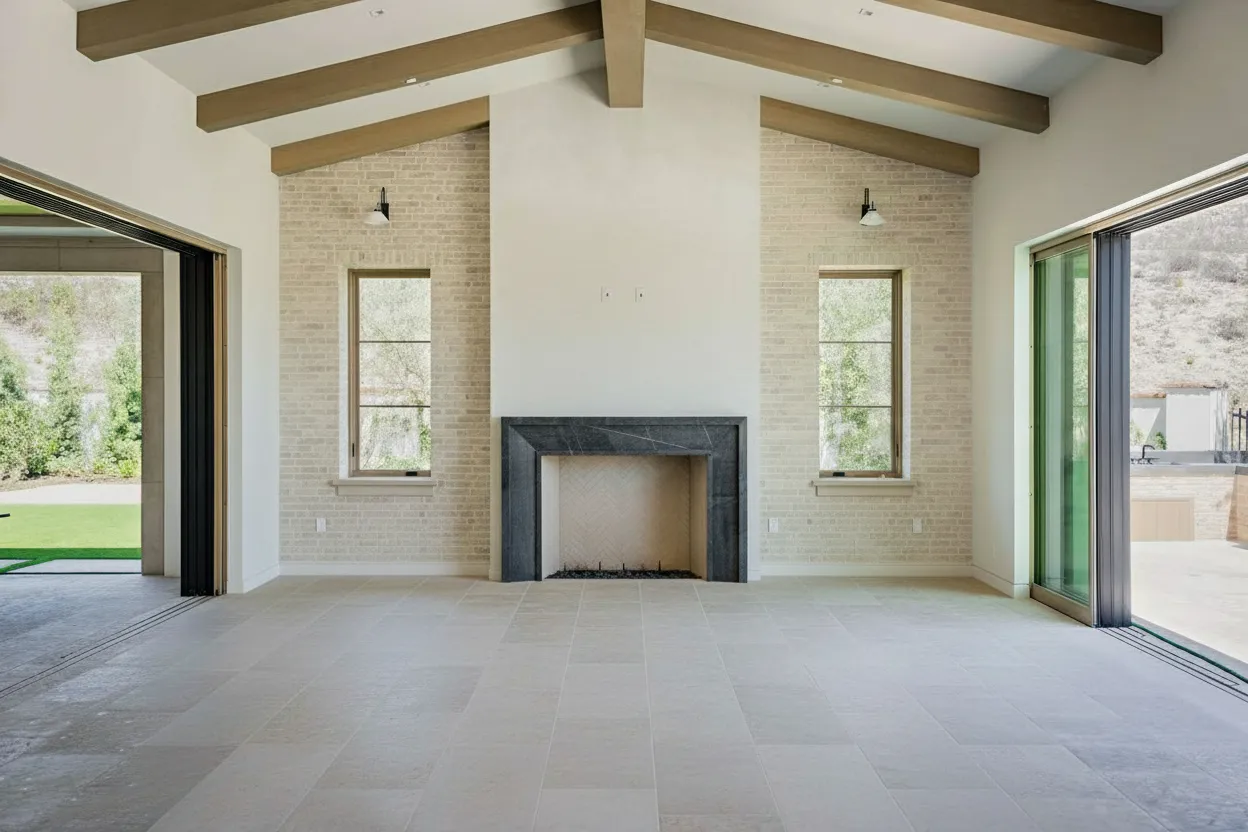
In a crowded market, some listings sit for weeks while others get snapped up in days. What’s the difference? Often, it comes down to the photos. AI real estate photo editing is the secret weapon that turns standard property shots into stunning, magazine-quality images that grab a buyer’s attention and won’t let go.
The New Standard in Property Marketing
It’s 2026, and artificial intelligence isn’t some far-off concept—it’s the engine running modern real estate marketing. Think about it: a potential buyer forms an opinion about a property in the few seconds it takes to scroll past it online. If your photos don’t immediately pop, even the most incredible home can get completely overlooked.

From Manual Labor to Instant Results
For years, editing real estate photos was a slow, painstaking process. You either spent hours tweaking images yourself in Photoshop or sent them off to an editor and waited days for the files to come back. This delay created a major bottleneck, pushing back your launch date and losing valuable time on the market.
AI real estate photo editing completely changes that dynamic. Think of it as an instant digital darkroom. Platforms like BrightShot give agents, photographers, and stagers the power to produce incredible, high-end images without the high cost or the long wait. The AI does the heavy lifting, freeing you up to focus on what you do best: serving clients and closing deals. This isn’t just about saving a little time; it’s a fundamental shift that gives you a real competitive edge.
The Business Impact of AI-Powered Visuals
There’s a reason this technology is taking off so quickly: the results speak for themselves. The global market for AI Photo Making Software, which was valued at USD 751.41 million in 2025, is expected to climb to USD 864.50 million in 2026 and skyrocket to USD 2,116.56 million by 2032. This isn’t just hype; it shows how essential AI has become for anyone who needs to produce quality visuals at speed.
AI editing moves your business from a reactive state, where you wait for edits, to a proactive one, where you control the entire marketing timeline from capture to launch.
This guide will walk you through exactly how to put this technology to work for your business. We’ll break down how these tools create such impressive results and, more importantly, how that translates into real-world business outcomes.
- Faster Sales Cycles: Get your listings live in hours, not days, with instant photo processing.
- Reduced Marketing Costs: Drastically cut down on expenses from manual editing services and physical staging.
- Happier Clients: Wow your sellers with exceptional marketing that presents their home beautifully.
When you adopt AI real estate photo editing, you’re doing more than just touching up photos—you’re modernizing your entire marketing workflow. It’s a critical skill for today’s professionals, much like knowing which types of photos to use for maximum impact. To go even further, see how you can broaden your visual strategy by reading our guide on aerial photography for real estate.
How AI Transforms Real Estate Photos
So, how does AI photo editing actually work? Forget the complex tech talk. Think of it as a seasoned photo editor who has spent years studying what makes a property photo catch a buyer’s eye. This AI has analyzed millions of successful listing images, so it intuitively knows how to make a space look its absolute best.
For example, when the AI sees a photo with a drab, grey sky, it doesn’t just see a problem—it sees an opportunity. It precisely identifies the skyline and swaps out the dull background for a brilliant blue sky or a stunning twilight, all while adjusting the lighting and reflections across the entire photo to match. It’s not just cutting and pasting; it’s a complete atmospheric recreation. This is the real power of AI real estate photo editing: it understands context.
The same intelligence applies indoors. An AI doesn’t just see four empty walls. It recognizes the floor plan, the light sources from windows, and the room’s dimensions. This spatial awareness is what allows it to do incredible things, like adding realistic virtual furniture almost instantly.

From Simple Fixes to Full Transformations
Modern AI goes way beyond simple brightness and contrast sliders. It’s a specialist that automates the tedious, detail-oriented work that used to chain photographers and agents to their desks for hours.
Here are a few of the most common—and impactful—tasks it handles:
- Lighting and Color Correction: The AI instantly spots and fixes poor lighting. It brightens up dark rooms to make them feel warm and welcoming, and it neutralizes the weird yellow cast from indoor bulbs so that wall and floor colors look true to life.
- Sky Replacement: This is a classic for a reason. Replacing a washed-out sky with a perfect one is one of the fastest ways to boost curb appeal and make a property stand out online.
- Virtual Staging and Decluttering: This is where the magic really happens. AI can furnish an empty room with stylish, properly scaled furniture in any style you want, from ‘Modern Farmhouse’ to ‘Scandinavian Minimalist’. It can also do the opposite: take a cluttered room and digitally remove personal items to create a clean, depersonalized space that buyers can project themselves into.
The goal of AI editing isn’t to create a fake image, but to reveal the property’s true potential. It helps buyers see past an empty room or a cloudy day to envision themselves living in the space.
The AI Editing Workflow Under the Hood
To really grasp the difference AI makes, you have to look at the workflow. A traditional editor might spend hours manually masking windows, adjusting color layers, and painstakingly adding furniture, one photo at a time. An AI platform like BrightShot automates that entire process. You can learn more about these specific methods in our deep dive on achieving perfect lighting enhancement.
An agent can upload an entire day’s shoot, select their desired enhancements, and get back a full set of polished, listing-ready images in a matter of minutes. The time savings are huge, but just as important is the brand consistency it creates across every single photo.
This table breaks down the practical differences between the old way and the new.
Traditional Editing vs AI Photo Editing Workflows
| Task | Traditional Editing | AI Editing (with BrightShot) |
|---|---|---|
| Time per Listing | 24-48 hours (for a full set of photos) | Under 10 minutes (for a full set of photos) |
| Cost per Image | $5-$150+ (depending on complexity and staging) | Pennies to a few dollars (or included in a plan) |
| Required Skill Level | High (requires software expertise and design eye) | None (intuitive, one-click interface) |
| Consistency | Varies (depends on the individual editor) | Perfect (applies the same style across all images) |
As you can see, the shift isn’t just about speed. It’s about making professional-grade results accessible, affordable, and incredibly consistent, no matter your technical skill level.
Of course. Here is the rewritten section, designed to sound completely human-written, natural, and authoritative.
The Business Case for AI Photo Editing
Sure, AI editing makes real estate photos look incredible. But the real story isn’t just about aesthetics—it’s about what those images do for your business. Think of it less as a simple tech upgrade and more as a fundamental shift in how you operate, one that directly impacts your time, your budget, and your sales numbers.
The old way of doing things always involved a waiting game. You’d finish a shoot, send the files off to an editor, and then… wait. That 24 to 48-hour delay is a huge momentum killer. Every hour you spend waiting for photos is an hour your property isn’t in front of potential buyers, letting that initial buzz fade away.
AI completely flips that script. Instead of days, you’re talking minutes. You can take a full set of photos and have them polished, perfected, and ready for the MLS almost instantly. This means getting listings live faster than your competition, grabbing buyer attention right away, and giving your clients a real advantage.
Slashing Costs and Boosting Capacity
The financial argument for AI is just as powerful. We all know physical staging works, but it’s a massive expense, often running into thousands of dollars for a single home. Traditional virtual staging was a step in the right direction, but at $50-$200 per image, it still added up. With AI, you get that same professionally staged look for a tiny fraction of the price.
This isn’t just about staging, either. All those little editing tasks—like replacing a gray sky, brightening a dark room, or removing clutter from a shot—add up. AI automates it all, cutting out the recurring costs of freelance editors or per-image fees. For a busy agent or a photography business handling a high volume of properties, those savings are substantial.
The real return on investment comes from what you do with the resources you get back. The time and money saved on photo editing can be poured directly into what really grows your business: finding new clients and marketing your brand.
This newfound efficiency also means you can handle more work. A photographer who can deliver a finished gallery in minutes instead of days can suddenly take on more clients. An agent who isn’t bogged down coordinating edits and staging can manage a larger portfolio of listings. You’re effectively scaling your business without burning yourself out.
Driving Tangible Sales Performance
At the end of the day, it all comes down to results. Do better photos actually lead to faster sales and higher offers? Absolutely. It all starts with getting more eyeballs on your listing in the first place. In a sea of online listings, professional, eye-catching photos are what make people stop scrolling and click. AI editing guarantees every single image you post meets that high standard.
I saw this firsthand with an agent working in a tough suburban market. Her listings were consistently sitting on the market for over 45 days. She decided to try AI for virtual staging and turning bland daytime shots into beautiful “dusk” photos. The result? Her next three listings went under contract in less than 30 days. That’s a sales cycle cut by over 30%, all because the enhanced photos helped buyers truly envision themselves in the home.
This link between photo quality and sales speed is no secret. Real estate photography has become a massive part of the U.S. photography market, which recently hit $15.8 billion after growing at a 5.8% compound annual rate. The demand for AI tools is about to skyrocket, with the global AI photo maker market projected to leap from around $500 million in 2025 to $2.5 billion by 2033. You can dig deeper into these photography industry trends to see where things are headed.
When you break it down, the formula is simple:
- Increased Visibility: Better photos grab more attention on Zillow, Redfin, and the MLS.
- Higher Engagement: Stunning images make buyers spend more time looking at your listing and exploring the details.
- Emotional Connection: A virtually staged living room or a twilight exterior helps buyers form a crucial emotional bond with the property.
- Faster Action: Put it all together, and you get more showing requests, more serious offers, and a quicker sale.
By connecting every photo to a measurable business outcome, AI real estate photo editing proves it’s not just a cool new gadget. It’s an essential part of any modern real estate strategy.
It’s one thing to talk about AI in theory, but the real “aha!” moment comes when you see it in action. Let’s walk through a typical workflow, starting with a plain, unedited photo of an empty room and turning it into a gorgeous, listing-ready image in just a few minutes.
You’ll be surprised at how intuitive the process is, even if you’ve never touched photo editing software. Most AI platforms follow a similar, user-friendly path that makes powerful editing tools accessible to everyone.
Step 1: Upload Your Photos
It all starts the moment you upload your raw images. You can drag and drop them straight from your computer or phone—whether it’s a single hero shot or an entire folder from a full day’s shoot.
Good platforms are built to handle multiple images at once, which is a huge time-saver when you’re processing an entire property. Once your photos are uploaded, they’ll appear in a gallery, ready for you to get to work. No need to stress about file types or sizes; the software takes care of all that for you.
Step 2: Choose Your Core Edits
This is where you tell the AI what you want it to do. Instead of wrestling with confusing sliders and technical tools, you’ll see a simple menu of one-click options. Think of it less like a complicated cockpit and more like a restaurant menu where you just pick what you want.
A common workflow for an empty living room might look something like this:
- Select Virtual Staging: This is your main goal. You’ll choose this option to fill the empty space with furniture.
- Pick a Design Style: Next, you get to play interior designer. You’ll be presented with a library of styles like “Coastal,” “Mid-Century Modern,” or “Bohemian” to perfectly match the home’s vibe.
- Correct the Lighting: If the room looks a bit dark or has that weird yellow glow from indoor lights, a single click on “Lighting Enhancement” fixes it. The AI automatically balances the light and color to make the space feel natural and inviting.
Step 3: Add the Finishing Touches
After you’ve handled the big-ticket items, you can add the final polish that makes a photo truly pop. These are the details that often take hours to get right by hand, but with AI, they’re practically effortless.
- Day-to-Dusk Conversion: Turn a standard daytime shot into a dramatic twilight photo to give the property a high-end, premium feel.
- Sky Replacement: Swap out a drab, overcast sky for a perfect blue one in a single click.
- Grass Greening: Instantly transform a patchy, brown lawn into something lush and healthy.
- Object Removal: Easily erase distracting clutter—think stray trash cans, pool toys, or visible extension cords—from a photo with a simple command.
As you get more comfortable, you might want to integrate specific AI photo editing software like Topaz Photo AI to see how different tools approach these tasks. While each platform has its own strengths, the core workflow usually stays the same.
The real beauty of an AI workflow is that it’s completely non-destructive. You can experiment with different styles and enhancements, see previews in real-time, and only commit when you find the look you love—all without ever touching your original photo.
And if you’re looking to really master the fundamentals, check out our guide on how to improve the lighting of any room for more hands-on tips.
Step 4: Download and Go Live
Once you’re thrilled with the results, the final step is a simple download. The AI processes your requests and delivers high-resolution, MLS-compliant photos in moments. From there, they’re ready to upload directly to your listing, share on social media, or send to your client for that “wow” reaction.
The entire process—from raw photo to a fully staged and polished image—can take less than five minutes. This isn’t just about saving time; it’s a direct path to faster sales, lower marketing costs, and stronger overall performance.
This flowchart breaks down the direct return on investment you get when you bring an AI-powered editing process into your business.

The takeaway is simple: by speeding up your marketing timeline and cutting down on operational costs, AI becomes a powerful tool for improving your bottom line.
Integrating AI Into Your Professional Workflow
Once you’ve gotten the hang of enhancing a single image, the next logical step is to weave AI real estate photo editing directly into your day-to-day work. This is where you graduate from touching up photos one by one to truly scaling your visual marketing. It’s less about adding an extra task and more about making incredible visuals an automatic, built-in part of how you do business.
For busy photographers or large brokerages, batch processing is a lifesaver. You can upload an entire day’s shoot—we’re talking hundreds of photos—and let the AI handle the consistent sky replacements, lighting adjustments, and color corrections across the whole set. This just crushes the tedious, manual work that slows everything down, freeing you up to manage client relationships or get to the next property.
This kind of automation is quickly becoming the new baseline. Projections show that by 2026, AI will be central to most real estate photography workflows. Already, 70% of agents have experimented with AI for things like virtual renovations and decluttering. Those who have adopted it are reporting 50% faster processing times and are seeing properties with AI-enhanced visuals sell 32% quicker. You can see the complete data behind these shifts in this report on the future of real estate imagery.
Taking Automation to the Next Level with APIs
For the ultimate in efficiency, nothing beats an Application Programming Interface (API). Just think of an API as a private, secure pipeline that connects the AI editing engine directly to your own software—whether that’s a brokerage platform, a CRM, or a property management system.
Instead of manually uploading photos to a third-party site, your entire workflow happens automatically. A photographer uploads their raw shots to your portal, the API immediately sends them for AI processing, and the finished, polished images are returned and dropped right into your listing templates without anyone lifting a finger.
An API makes AI a system that works for you, not just a tool you use. It creates a completely hands-off process from the moment the shutter clicks to the second your marketing goes live, locking in brand consistency and saving huge amounts of admin time.
This deep integration unlocks some seriously powerful capabilities:
- Automated Virtual Staging: The system can spot empty rooms in an image gallery and instantly apply your preferred staging style.
- Instant Social Media Assets: You can generate branded video tours from your still photos, complete with your logo, and have them ready to post.
- Effortless Quality Control: Every single photo gets the same professional treatment, ensuring your brand standards are always met.
If you’re managing a high volume of listings and this sounds like a fit, the next move is to look into a dedicated AI photo editing API solution.
From Still Images to Immersive Experiences
Today’s AI does so much more than just clean up photos; it can actually create entirely new marketing assets from them. This is where you can really start to stand out from the competition and give potential buyers a richer, more compelling look at a property.
For example, many platforms can now take a series of your still photos and create a slick, cinematic video walkthrough. The AI intelligently pans and zooms across your high-res images, adds music, and even includes your branding. Suddenly, you have a captivating video for Instagram or TikTok without ever having to hire a videographer.
The technology can also build immersive 360° virtual tours from your stills. This gives buyers the power to “walk” through a home from their laptop or phone, helping them form a genuine connection to the space long before they schedule an in-person visit. It turns passive viewing into an active, engaging experience.
Using AI Editing Ethically and Effectively
There’s no question that AI real estate photo editing is a powerful tool. But with that power comes a big responsibility: use it to enhance, not to deceive. The entire point is to make a property look its absolute best, not to create a fantasy version that misleads potential buyers. Walking this line is fundamental to keeping your clients’ trust and staying on the right side of MLS rules.
Think of it this way: cleaning a dirty window in a photo is a great enhancement. Digitally adding a new window where one doesn’t exist? That’s a major problem. The same goes for AI. Using it to brighten a dim, shadowy room helps buyers see its true potential. Using it to remove a structural pillar is flat-out misrepresentation.
Keeping It Real with Photorealism
The best AI edits are the ones nobody ever notices. The final image should feel so authentic that a viewer would never stop to think it was touched up. The moment an image looks “off”—maybe the lighting is a little too perfect or the virtual sofa seems to be floating an inch off the floor—you’ve broken the spell and lost credibility.
This is exactly why having a “human in the loop” is non-negotiable. Let the AI do the heavy lifting, like handling the initial color correction or placing virtual furniture. But a seasoned professional should always have the final say. That last look is what ensures every photo is realistic, compliant, and meets your brand’s quality standards. A quick sanity check makes all the difference.
The Ethical AI Checklist
Before you hit “publish” on any AI-edited image, run through these questions. They’ll help you gut-check your work and make sure you’re presenting the property honestly.
- Is the property’s structure unchanged? Never add or remove permanent features. This includes walls, windows, support beams, or built-in cabinetry.
- Does the lighting look natural? You want to brighten dark spaces, but avoid the overly-processed, artificial look. Light should appear to come from its original sources, like windows and fixtures.
- Are virtual furnishings to scale? Make sure that staged furniture fits realistically in the room. This gives buyers an accurate sense of the space and its dimensions.
- Have you disclosed major changes? For bigger edits like virtual staging or full sky replacements, transparency is key. Most MLS guidelines simply require a small disclaimer, such as “Virtually Staged.”
Maintaining authenticity isn’t just about following rules; it’s about building credibility. When buyers trust your photos, they are more likely to trust you as an agent or photographer.
To protect your professional integrity, it’s worth getting familiar with the different AI image manipulation techniques and how to spot them. Understanding the technology helps you make smarter decisions that safeguard your reputation and your clients’ best interests. At the end of the day, ethical AI real estate photo editing is about helping buyers see a home’s true potential, ensuring the “wow” they feel online matches the reality they see in person.
Frequently Asked Questions About AI Photo Editing
Whenever we talk with agents and photographers about AI real estate photo editing, the same handful of great questions always come up. It’s smart to be skeptical about new tech, so let’s tackle the big ones head-on: quality, ethics, cost, and usability.
Can AI Really Match a Professional Human Editor?
Let’s get right to it: for the everyday edits that make up the bulk of real estate photography, the answer is a resounding yes. In fact, for consistency and speed, AI often has the edge over a human. It’s brilliant at the repetitive, rule-based tasks that used to take hours of manual work.
Think about tasks like:
- Sky Replacement: Instantly turning a drab, overcast day into a perfect blue-sky afternoon.
- Color Correction: Getting rid of that stubborn yellow cast from indoor lighting to show true wall and furniture colors.
- Lighting Adjustments: Brightening up a shadowy room so it looks and feels spacious and inviting.
- Virtual Staging: Adding furniture that’s perfectly scaled and lit, making an empty room feel like a home.
Where a human touch still shines is in highly artistic or uniquely complex edits. But even then, a hybrid approach is incredibly powerful. Let the AI do 80-90% of the heavy lifting in seconds, then have a person add that final creative polish.
Is Virtual Staging with AI Deceptive?
This is a huge—and valid—concern. The short answer is no, provided you’re transparent. The whole point of virtual staging isn’t to mislead buyers about a property’s condition but to help them see its potential.
Ethical AI editing doesn’t change a property’s truth; it just presents that truth in the best possible light. A virtually staged photo should inspire a buyer, not trick them.
Most MLS boards are completely on board with virtual staging and have a simple rule: just label the photos as “virtually staged” in your listing. This simple disclosure ensures everyone knows they’re looking at a beautifully furnished concept, which keeps everything professional and honest.
How Much Does AI Editing Cost Compared to Manual Services?
This is where AI really pulls ahead. Traditional virtual staging can eat up a marketing budget fast, with costs often running between $50 and $200 per photo. When you outsource a full set of images for manual touch-ups, those costs can skyrocket.
By contrast, AI real estate photo editing tools usually run on a simple subscription or a very low per-image fee—we’re talking just a few dollars. This massive price difference puts top-tier visual marketing within reach for everyone, whether you’re a solo agent or a large brokerage.
Do I Need Special Skills or Training?
Absolutely not. The best AI platforms were built for busy real estate professionals, not tech wizards. The entire experience is designed to be intuitive. If you can upload a photo from your phone or computer and click a button, you have all the technical skill you need. You can go from a raw photo to a polished, listing-ready image in just a few minutes.
Ready to see how fast and easy it is to create stunning property visuals? Join over 5,000 professionals who trust BrightShot to transform their photos in seconds. Start your free trial today and get your first three images enhanced for free.